In 2026, doors and windows will be judged by more than appearance. Global buyers increasingly want reliable performance, energy efficiency, security, and long service life. A stylish frame means little if it leaks during monsoon rain or warps under intense sunlight.
This guide introduces leading door and window types for residential, commercial, and industrial projects. It considers aluminum, uPVC, timber, steel, sliding, folding, casement, tilt-and-turn, and smart systems. Each option offers different strengths. Aluminum suits wide glass openings and modern façades. uPVC provides practical insulation and limited maintenance. Timber adds warmth, but it needs careful moisture protection. Steel delivers strength, although thermal performance requires attention.
Climate should guide every decision. Coastal buyers may prioritize corrosion resistance. Cold regions need low heat transfer and dependable seals. In busy cities, laminated glass and tight frames can reduce outside noise. Installation quality matters just as much as product selection. Even an excellent window can fail when drainage paths, anchors, or sealants are poorly handled.
Details matter.
Our recommendations draw on common project requirements, supplier specifications, and real installation concerns. However, no product fits every market perfectly. Product labels can sound impressive, yet testing methods and local conditions may differ. Buyers should verify certifications, warranty terms, replacement support, and factory quality before ordering. Budget pressure can also distort priorities. Choosing the cheapest frame may create higher maintenance costs later. This overview offers a practical starting point, while encouraging buyers to question assumptions and compare evidence carefully.
For global buyers, door and window types should be classified by use, movement, climate, and performance. A sliding door saves swing space, while a hinged door usually seals more tightly. Casement windows support controlled ventilation. Awning windows shed light rain. Fixed glazing brings daylight but provides no airflow. This is the practical starting point.
Material selection changes maintenance and thermal behavior. Aluminum frames are slim and durable, but thermal breaks are essential in hot or cold climates. uPVC frames offer low maintenance and useful insulation. Timber can perform well, yet moisture control requires discipline. Composite frames balance several properties, although specifications differ widely. The classification is not perfect.
Performance deserves more attention than appearance. The IEA’s Tracking Buildings 2023 report states that buildings use about 30% of global final energy. The U.S. Department of Energy estimates that windows can cause 25–30% of household heating and cooling energy use. Buyers should compare U-values, solar heat gain coefficient, air leakage, water resistance, and acoustic ratings. Request tested results under recognized standards, not vague claims such as “energy saving.” In coastal projects, check corrosion protection and drainage details. In windy regions, verify pressure ratings and hardware durability. Installation can still undermine excellent products; site tolerances, flashing, and sealant workmanship matter. A cheaper unit may become expensive after repeated repairs.
In 2026, global buyers are comparing doors and windows by material performance, not appearance alone. Aluminum remains popular because it is light, recyclable, and suitable for large openings. Thermally broken frames reduce heat transfer through the metal. However, poor insulation can still create cold interior edges.
uPVC offers strong moisture resistance and practical pricing for residential projects. Fiberglass frames resist warping and handle temperature changes well. Engineered wood provides warmth and stiffness, but it needs careful sealing around joints. Composite frames combine materials, yet their repair methods may be less familiar in some markets. No material is perfect.
Structural design is becoming equally important. Lift-and-slide doors can connect living rooms with balconies using fewer visible barriers. Tilt-and-turn windows support ventilation while limiting opening size. Folding systems create wider access, but their hinges and tracks require accurate installation. Triple glazing improves sound control and thermal stability in demanding climates. Low-emissivity coatings help manage solar gain, especially in sun-heavy regions.
In project evaluations, I check drainage channels, gasket compression, corner strength, and threshold height. Small details often decide long-term performance. Seismic zones may require flexible connections, while coastal areas need corrosion-resistant hardware. Local wind loads, fire rules, accessibility requirements, and energy codes must guide final specifications. A beautiful frame can still fail when installation tolerances are ignored. I have seen this mistake repeated. 马会?
Global buyers need doors and windows that match local climate conditions, not just attractive designs. Climate changes performance dramatically. In hot regions, low solar heat gain glass can reduce indoor temperatures and cooling costs. In cold climates, insulated frames and low U-values help retain warmth. Coastal homes need corrosion-resistant hardware and reliable drainage. No product is perfect.
Select systems with independently verified air, water, wind, and thermal performance ratings. A low U-value alone can mislead if installation quality is poor. Security also depends on the complete assembly. Laminated glass, reinforced frames, multi-point locks, and concealed hinges can slow forced entry. However, heavier systems may require stronger walls and more careful fitting. Installation matters. Even a high-performance window can leak around an unsealed frame. Experienced installers should check openings, flashing, drainage paths, and alignment before final adjustment.
Tips: Compare tested performance data for your actual climate zone. Ask about condensation control during cold mornings. Inspect seals for consistent contact. For sunny rooms, consider external shading, because glass alone cannot solve every heat problem. Review maintenance needs, especially near saltwater or dusty roads. It is also wise to request installation records and warranty terms in writing. Small details often decide long-term comfort.
| Product Type | Typical Construction | Indicative Thermal Performance | Climate Suitability | Energy-Efficiency Features | Security Features | Weather and Maintenance Considerations | Best Use Cases |
|---|---|---|---|---|---|---|---|
| uPVC Windows | Multi-chamber extruded uPVC frames with insulated glazing and steel or composite reinforcement where required. | Typical whole-window U-factor: about 0.8–1.4 W/m²K with modern double or triple glazing. | Suitable for cold, temperate, coastal, and hot climates when the profile, glazing, drainage, and UV resistance are correctly specified. | Low-conductivity frames, double or triple glazing, low-emissivity coatings, warm-edge spacers, and argon-filled cavities. | Multi-point locking, laminated security glass, reinforced profiles, and restrictors can improve resistance to forced entry. | Low painting requirements; expansion, color stability, drainage, and seal quality should be checked in high-heat or high-UV regions. | Residential projects, apartments, replacement windows, and projects prioritizing low maintenance and cost control. |
| Thermally Broken Aluminum Windows | Aluminum frames separated by polyamide or another low-conductivity thermal barrier. | Typical whole-window U-factor: about 0.9–1.8 W/m²K, depending on frame depth and glazing. | Effective in hot, temperate, windy, and humid climates; suitable for large openings when structural strength is important. | Thermal breaks, low-e glass, solar-control coatings, insulated spacers, and carefully designed frame-to-wall interfaces. | Strong frame sections, multi-point hardware, laminated glass, concealed hinges, and tested locking systems are available. | Durable and dimensionally stable; coastal installations require suitable finishes, fasteners, and galvanic-corrosion control. | Large windows, commercial buildings, high-rise applications, coastal properties, and modern architectural designs. |
| Timber Windows | Engineered or solid wood frames, often protected with factory-applied coatings and combined with insulated glazing. | Typical whole-window U-factor: about 0.8–1.4 W/m²K with suitable double or triple glazing. | Well suited to cold and temperate climates; also usable in humid areas when detailing, coating, and ventilation are well managed. | Naturally low frame conductivity, low-e glazing, insulated spacers, airtight seals, and carefully sealed joints. | Multi-point locks, laminated glass, reinforced strike plates, and security hardware can provide strong protection. | Requires periodic inspection and repainting or recoating; moisture management is essential around sills, joints, and end grain. | Low-energy homes, heritage-style buildings, premium residential projects, and buyers seeking renewable frame materials. |
| Fiberglass or Composite Windows | Glass-fiber-reinforced polymer frames or composite frames combining low-conductivity materials. | Typical whole-window U-factor: about 0.7–1.3 W/m²K with high-performance glazing. | Suitable for cold, hot, humid, and high-temperature-swing climates because of low thermal expansion and good dimensional stability. | Low-conductivity frames, triple glazing, low-e coatings, insulated cavities, and airtight compression seals. | Compatible with multi-point locking, laminated glass, reinforced hardware zones, and security restrictors. | Generally low maintenance and resistant to moisture; finish quality, UV stability, and replacement-part availability should be verified. | High-performance residential buildings, extreme-temperature regions, and projects requiring long-term dimensional stability. |
| Insulated Steel Doors | Galvanized or coated steel skins around a foam-insulated core, usually with reinforced lock and hinge areas. | Typical door U-factor: about 1.0–1.8 W/m²K for well-insulated exterior units. | Suitable for cold, temperate, and high-security applications; coastal use requires appropriate corrosion protection. | Polyurethane or mineral-wool cores, insulated frames, compression weather seals, low-conductivity thresholds, and glazed-panel upgrades. | High resistance to impact, reinforced strike zones, multi-point locks, security cylinders, hinge bolts, and laminated vision panels. | Check edge sealing, threshold drainage, coating durability, and thermal bridging around the frame and lockset. | Main entrances, utility rooms, apartment buildings, industrial facilities, and projects requiring robust security. |
| Insulated Fiberglass Doors | Molded fiberglass skins over a polyurethane or similar insulated core, with composite or reinforced frames. | Typical door U-factor: about 1.0–1.8 W/m²K, depending on glazing, slab thickness, and frame design. | Suitable for cold, hot, humid, and coastal climates when the surface finish and hardware are correctly selected. | Insulated door slabs, perimeter compression seals, adjustable thresholds, low-e glazing, and insulated sidelights. | Reinforced lock blocks, multi-point locks, laminated glass, reinforced hinges, and impact-resistant panels can be specified. | Low maintenance and good resistance to moisture; inspect seals, sill drainage, and surface damage during service life. | Residential entry doors, energy-efficient renovations, coastal homes, and locations exposed to humidity or temperature changes. |
| Thermally Broken Aluminum Doors | Aluminum door leaves and frames incorporating thermal barriers, often with large glazed areas. | Typical door U-factor: about 1.2–2.0 W/m²K, strongly affected by glazing ratio and frame depth. | Suitable for hot, temperate, humid, and high-wind climates; performance depends heavily on seals and threshold design. | Thermal breaks, low-e or solar-control glazing, insulated panels, warm-edge spacers, and thermally improved thresholds. | Multi-point locking, heavy-duty cylinders, laminated glass, anti-lift devices, and reinforced hinges are commonly available. | Requires attention to drainage, air leakage, corrosion-resistant finishes, and compatibility with coastal environments. | Patio doors, commercial entrances, balconies, hotels, offices, and projects with wide glazed openings. |
| Timber Exterior Doors | Solid or engineered timber slabs with insulated cores, timber frames, weather seals, and optional glazed sections. | Typical door U-factor: about 1.2–2.0 W/m²K for insulated, well-sealed designs. | Suitable for cold and temperate climates; usable in humid regions with suitable species, coatings, overhangs, and drainage. | Insulated cores, low-e glazing, compression seals, insulated thresholds, and thermally improved door frames. | Multi-point locks, laminated glass, reinforced frames, security cylinders, and hinge-side protection can enhance security. | Requires regular coating and moisture inspections; dimensional movement should be considered in extreme humidity variations. | Traditional architecture, premium entrances, heritage renovations, and projects emphasizing natural materials. |
| Sliding Glass Doors | Large glazed panels moving on rollers within uPVC, aluminum, timber, or composite frames. | Typical whole-door U-factor: about 1.0–2.2 W/m²K; sliding systems generally require careful air-seal detailing. | Suitable for temperate and hot climates; solar-control glass is important in high-sun regions and exposed façades. | Low-e or solar-control glazing, thermally broken frames, insulated spacers, air-tight interlocks, and external shading. | Laminated or toughened safety glass, anti-lift blocks, multi-point locks, restricted opening hardware, and reinforced tracks. | Tracks and drainage channels require regular cleaning; rollers, seals, and frame alignment affect long-term performance. | Patios, balconies, terraces, hospitality projects, and spaces requiring daylight and wide access openings. |
| High-Performance Tilt-and-Turn Windows | Multi-seal windows that open inward by tilting for ventilation or turning for full access, commonly using uPVC, timber, or thermally broken aluminum. | Typical whole-window U-factor: about 0.7–1.3 W/m²K with triple glazing and insulated frame systems. | Especially suitable for cold, windy, rainy, and urban climates; solar-control glazing may be needed in hot regions. | Multiple compression seals, triple glazing, low-e coatings, warm-edge spacers, insulated frames, and controlled ventilation. | Multi-point locking around the sash, concealed hardware options, laminated glass, and handle locks can improve resistance to intrusion. | Good airtightness when correctly installed; hardware adjustment, seal inspection, and drainage maintenance are important. | Low-energy homes, passive-house-oriented projects, noisy urban areas, and buildings requiring controlled ventilation. |
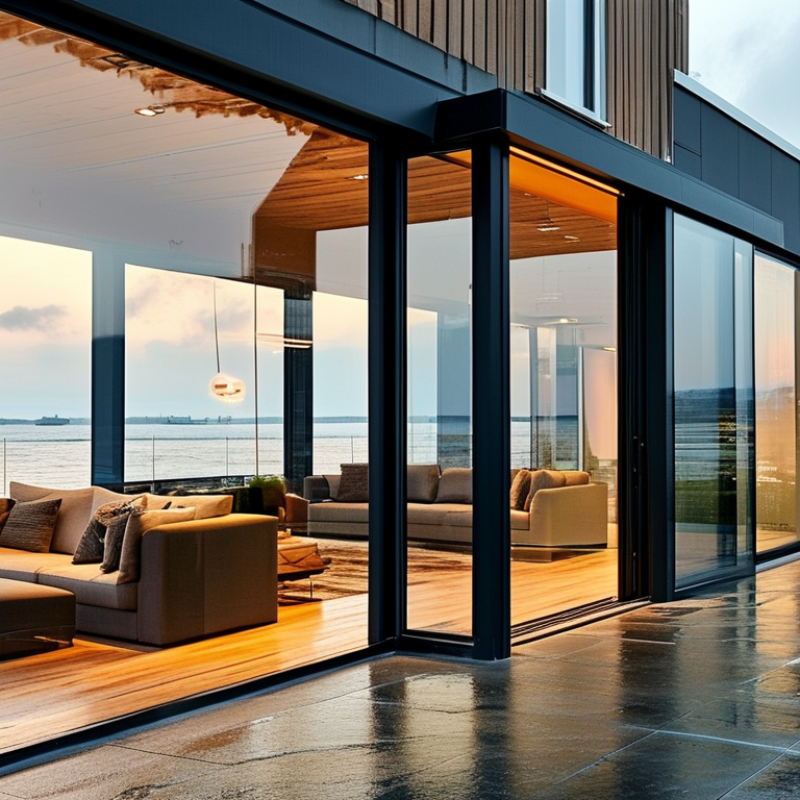
2026 Top Types of Doors and Windows for Global Buyers
For residential projects, selection should begin with climate, room use, and daily movement. Casement windows provide strong ventilation and tight closing pressure. Sliding windows save space but may offer less airtight performance. Tilt-and-turn systems suit bedrooms, kitchens, and high-rise homes. Hinged doors feel familiar, while sliding doors connect living rooms with balconies. Timber brings warmth, but it needs regular coating in humid regions. Aluminum offers slim frames and durable service. The perfect material rarely exists.
Commercial projects require stricter attention to traffic, safety, acoustics, and maintenance. Entrance doors may need automatic operation, wide clear openings, and impact-resistant glazing. Curtain wall systems support daylight, but their thermal bridges require careful engineering. For offices near airports or busy roads, laminated acoustic glass can improve comfort. Buyers should compare U-values, air leakage, water resistance, and verified test reports. Local building requirements still control the final design. Even experienced teams sometimes overlook cleaning access and replacement time.
Tips: Request performance data before comparing prices. Check frame samples in real daylight. Confirm hardware availability locally. Ask how the system performs after repeated opening cycles. Consider installers’ training, warranty terms, and spare-part support. A cheaper window can become expensive when seals fail early. Recheck assumptions before approval.
Regional standards shape every successful door and window project. A coastal home may need corrosion-resistant hardware and stronger wind protection. A cold-climate building usually requires low U-values, insulated frames, and reliable weather seals. In warmer regions, solar control glass and effective ventilation may matter more. Local rules can also define safety glazing, fire escape sizes, accessibility, and opening directions. A familiar specification may fail in another country.
Customization should begin with the building, not a catalog image. Measure each opening carefully, including wall thickness, sill levels, and installation gaps. Buyers can adjust frame colors, glass performance, mosquito screens, handle positions, and inward or outward operation. Large glass panels look attractive, but they increase weight and may require stronger reinforcement. Small details matter. I have seen projects delayed because the window hardware did not match local installation practices.
Purchasing decisions need documented evidence. Request technical drawings, performance test reports, material descriptions, packing details, and clear tolerance limits. Confirm whether quoted performance applies to the complete unit or only the glass. Ask about replacement parts and after-sales support before placing a deposit. Sample approval is useful, although one sample cannot reveal every production risk. Independent inspection can check dimensions, surface quality, locking function, and packaging before shipment. Delivery schedules also need flexibility. Port delays, revised drawings, or local approval issues can change the original plan. No checklist is perfect, so buyers should review assumptions with local installers and qualified building professionals.