The Best 10 Pipe Products You Need for Your Next Project
When embarking on a new project, having the right materials is crucial for success. Among the essential items in any builder's toolkit are pipe products, which serve a multitude of functions across various applications. Whether you're tackling plumbing tasks, constructing frameworks, or undertaking artistic endeavors, selecting the best pipe products can significantly impact the efficiency and durability of your work.
In this guide, we will explore the top ten pipe products that you should consider incorporating into your next project. Each item on our list has been chosen for its quality, versatility, and reliability. Understanding the differences between these products and their specific uses will help you make informed decisions, ensuring that your project runs smoothly and achieves the desired results. Stay tuned as we delve into these indispensable tools that are sure to elevate your craftsmanship and streamline your workflow.
The Importance of Choosing the Right Pipe Product for Construction Projects
When embarking on construction projects, selecting the right pipe products is crucial for ensuring structural integrity and operational efficiency. Data from the American Society of Civil Engineers indicates that approximately 30% of project failures can be attributed to improper material selection. This highlights the importance of thorough research and due diligence in the early stages of project planning. Choosing the appropriate pipe can contribute to the overall safety, durability, and functionality of the installation, making it essential for project managers and engineers to be well-informed.
Moreover, the construction industry is increasingly shifting towards sustainable practices, with a report from the International Energy Agency noting that materials account for almost 11% of global carbon emissions. By opting for eco-friendly pipe products, businesses can not only meet regulatory standards but also reduce their environmental footprint. Utilizing sustainable materials can enhance the appeal of projects to environmentally-conscious clients and stakeholders, further emphasizing the importance of careful selection in achieving both performance and sustainability goals in construction.
The Best 10 Pipe Products You Need for Your Next Project
Top 10 Pipe Materials and Their Applications in Modern Engineering
In modern engineering, the selection of pipe materials is crucial to ensure the success of any project. Different applications call for specific properties such as strength, corrosion resistance, and thermal durability. For example, polyethylene pipes are widely used in water supply systems due to their flexibility and resistance to corrosion, making them an ideal choice for underground installations. Similarly, PVC pipes are prevalent in plumbing and drainage applications due to their lightweight nature and cost-effectiveness, which allows for easy handling and installation without compromising reliability.
Metal pipes also have significant roles in engineering applications. For instance, stainless steel pipes are favored in industries where hygiene and corrosion resistance are paramount, like food processing and pharmaceuticals. On the other hand, carbon steel is often used in oil and gas applications due to its high strength and ability to withstand high pressures. Each material brings its unique advantages, and understanding their applications can greatly contribute to the efficiency and safety of engineering projects. By choosing the right type of pipe, engineers can ensure the longevity and functionality of their work.
Comparative Analysis of Pipe Product Durability and Cost-effectiveness
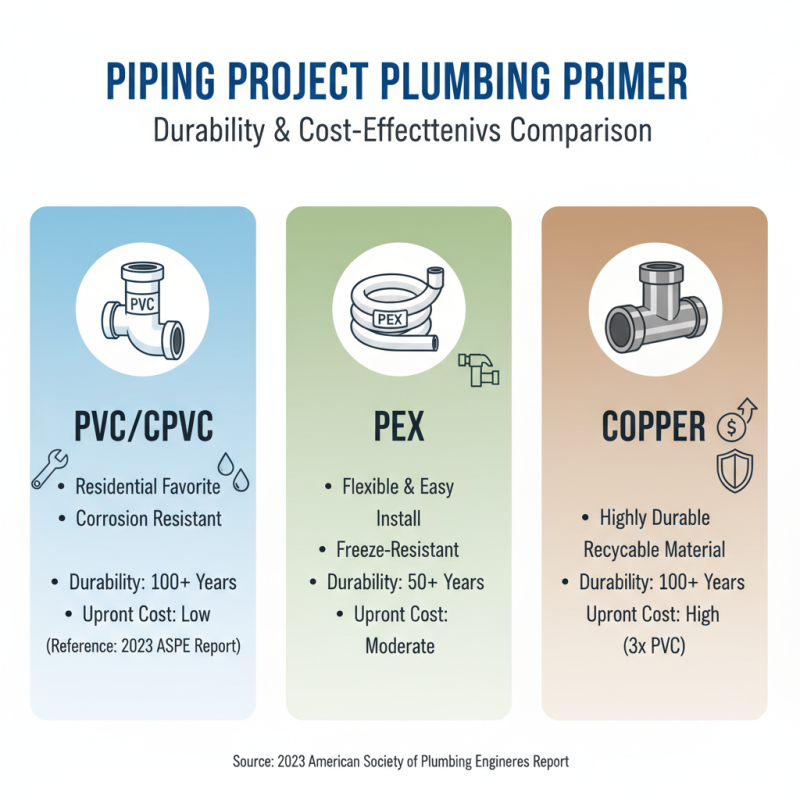
When embarking on a new project involving piping, understanding the durability and cost-effectiveness of different pipe products is crucial for making informed choices. A comparative analysis reveals that materials such as PVC, CPVC, and PEX are often favored in residential settings due to their lightweight nature and resistance to corrosion. According to a 2023 report by the American Society of Plumbing Engineers, while PVC pipes can last over 100 years under proper conditions, their upfront costs might be lower than materials like copper, which, while highly durable, can be up to three times more expensive.
Additionally, performance metrics indicate that while metal pipes experience higher rates of thermal expansion and contraction, they offer significant strength, making them suitable in high-pressure environments. The Global Pipe Market Analysis 2023 emphasizes that while installing more durable materials may require a higher initial investment, long-term savings can occur through reduced maintenance and replacement costs. Moreover, it is essential to consider environmental factors, as certain plastics can degrade faster when exposed to UV light, influencing both longevity and cost over time. Choosing the right material not only impacts the project's budget but also its sustainability and overall success.
Case Studies: Successful Projects Utilizing Recommended Pipe Products
In the world of construction and plumbing, the selection of pipe products can significantly influence the success of a project. Case studies highlight how utilizing high-quality pipe materials can lead to enhanced efficiency, durability, and cost-effectiveness. For instance, a recent residential development showcased the advantages of using sophisticated piping systems that not only reduced installation time but also minimized the risk of leakage over time. By opting for innovative materials, the builders were able to meet local building codes while also ensuring long-term sustainability for homeowners.
Another project, focused on commercial infrastructure, illustrated the benefits of using lightweight yet sturdy piping solutions. This project faced tight deadlines, and the chosen pipes allowed for faster transport and installation, contributing to the project being completed ahead of schedule. Furthermore, the increased resistance to corrosion and wear meant that maintenance costs would be significantly lower in the long run. These examples underscore the importance of selecting the right pipe products for various applications, showcasing their role in driving project success through improved performance and reliability.
The Best 10 Pipe Products You Need for Your Next Project
| Pipe Type |
Material |
Diameter (inches) |
Length (feet) |
Application |
Advantages |
| PVC Pipe |
PVC |
2 |
10 |
Drainage |
Lightweight, corrosion-resistant |
| Copper Pipe |
Copper |
1 |
20 |
Water Supply |
Durable, excellent heat conductivity |
| Steel Pipe |
Steel |
3 |
15 |
Gas Distribution |
High strength, corrosion resistance |
| PEX Pipe |
Cross-Linked Polyethylene |
1.5 |
25 |
Hydronic Heating |
Flexible, easy to install |
| Galvanized Pipe |
Steel |
2.5 |
30 |
Water Supply |
Rust resistant, strong |
| CPVC Pipe |
Chlorinated Polyvinyl Chloride |
3 |
10 |
Hot Water Supply |
High temperature resistance |
| Ductile Iron Pipe |
Ductile Iron |
4 |
50 |
Sewage Systems |
Resilient, impact resistant |
| ABS Pipe |
Acrylonitrile Butadiene Styrene |
2 |
10 |
Drainage |
Lightweight, easy to assemble |
| Schedule 40 PVC |
PVC |
3 |
12 |
Irrigation |
Cost-effective, durable |
| Stainless Steel Pipe |
Stainless Steel |
1 |
25 |
Food Processing |
Corrosion resistant, hygienic |
Industry Trends: Innovations in Pipe Technology and Materials for 2023
In 2023, the pipe industry has seen a remarkable evolution driven by innovative technologies and materials aimed at enhancing efficiency and sustainability. One of the standout trends is the increased use of advanced composite materials that offer superior strength-to-weight ratios, reducing the overall load on structures while maintaining durability. These materials also provide resistance to corrosion and chemical degradation, making them ideal for various applications, from industrial settings to residential plumbing. The shift towards light-weight yet robust pipe solutions is a response to the growing demand for more efficient construction methods and the need for longevity in infrastructure projects.
Additionally, the integration of smart technology into pipe systems is transforming how we manage and monitor water flow and quality. Sensors embedded within pipes can provide real-time data on pressure levels and detect leaks early, thus preventing costly damages and water loss. This digital innovation not only enhances operational efficiency but also supports the sustainable management of resources, aligning with the industry's commitment to reducing environmental impact. As 2023 unfolds, these innovations highlight a significant movement towards more resilient and technologically advanced pipe products that meet the evolving needs of modern construction and environmental stewardship.