What Is the Best PVC Wall Cladding from China?

Choosing the best PVC wall cladding from China requires more than comparing glossy catalogues and low prices. The answer is conditional. A suitable product must match the building’s moisture level, traffic, cleaning routine, and installation method. In real projects, a wall panel is touched, washed, cut, and exposed to changing temperatures. Those details often reveal quality better than photographs.

This guide examines PVC wall cladding through practical sourcing and construction considerations. We look at panel thickness, surface finish, joint design, dimensional stability, and available color consistency. Sample panels should be inspected under natural and artificial light. Small details matter. Check the locking edges, rear structure, protective film, and packaging strength. Ask suppliers for technical data, test reports, production references, and clear warranty terms. Factory experience is useful, but it should be supported by traceable evidence. Certifications can help, yet paperwork alone does not prove long-term performance.

The best choice may differ between a hotel bathroom, a retail corridor, and a healthcare space. Wet areas need reliable water resistance and carefully sealed joints. Busy interiors may require stronger surfaces and easier maintenance. Fire performance, indoor air quality, and local building requirements also deserve careful review. Installation quality matters. Even excellent panels can fail when walls are uneven or expansion gaps are ignored.

Some buyers focus only on price. That approach can fail. We will also consider lead times, replacement panels, communication, and after-sales support. No product wins every test. The goal is a balanced decision, supported by samples, verified documents, and realistic project conditions.
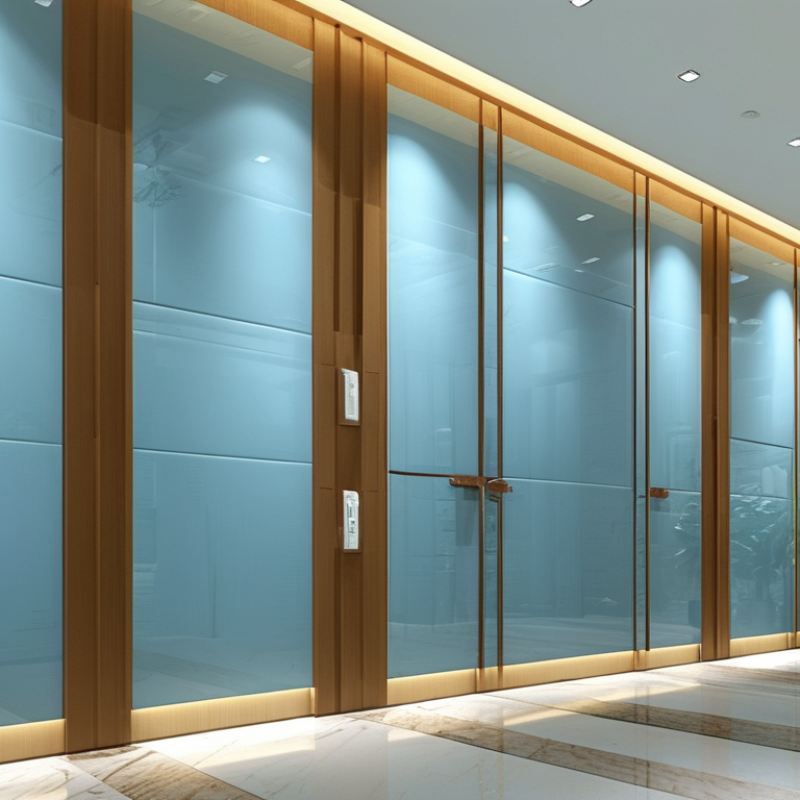
What Is the Best PVC Wall Cladding from China?

What Is PVC Wall Cladding and How Is It Used?

PVC wall cladding is a panel system made from polyvinyl chloride, a durable thermoplastic material. Panels may be hollow, solid, embossed, printed, or laminated. They cover walls and create a cleaner surface without wet plastering. Many products resist moisture, stains, and everyday impacts. However, PVC is not automatically waterproof. Poorly sealed joints can still allow water behind the panels.

In homes, PVC cladding is often used in bathrooms, kitchens, laundry areas, and utility rooms. Commercial spaces may use it in corridors, clinics, shops, and food preparation areas. Installers usually fix panels over a sound wall with adhesive, screws, or framing. The wall must be reasonably flat. Otherwise, visible waves may appear across the surface. Cutting around sockets also requires careful measuring and proper ventilation.

Choosing the best PVC wall cladding from China requires more than comparing prices. Check panel thickness, surface finish, locking accuracy, odor, and cleaning performance. Ask for product samples and independent test documents when fire safety matters. Confirm the actual dimensions, packaging strength, and tolerance before placing a large order. A sample can look perfect, yet a production batch may vary slightly. This is where I would remain cautious. Clear specifications, factory inspection, and written quality agreements make the purchase more dependable.

Which PVC Wall Cladding Types Are Made in China?

China manufactures several PVC wall cladding types for residential, commercial, and hospitality projects. The most common options include hollow panels, solid PVC sheets, marble-effect panels, wood-grain panels, and fluted designs. Each type serves a different purpose.

Hollow panels are lightweight and practical for quick interior renovation. Their internal structure reduces material use, but poor edges can crush during cutting. Solid sheets offer better impact resistance and suit busy corridors or retail spaces.

Marble-effect cladding creates a polished appearance without the weight of stone. Wood-grain finishes feel warmer in bedrooms, offices, and reception areas. Fluted PVC panels add texture, although dust may collect between the grooves.

In wet rooms, waterproof PVC panels with sealed joints are widely produced in China. Some use printed decorative films, while others include UV-resistant surface coatings. These coatings can improve color stability near windows, but they do not make every panel suitable for outdoor exposure.

I have found that surface thickness matters more than attractive samples. Ask for technical data, dimensional tolerances, fire-test documents, and moisture-resistance information. Check the panel after cutting.

Small details matter. A reliable supplier should explain the substrate, surface layer, installation method, and maintenance limits clearly. One common mistake is choosing by appearance alone.

A beautiful panel may still warp when storage conditions, wall flatness, or temperature are ignored. Sample approval, batch inspection, and clear packaging records make Chinese PVC cladding easier to evaluate.

How to Compare Chinese PVC Wall Cladding Quality and Performance?

Comparing Chinese PVC wall cladding requires more than checking price or surface appearance. Request samples from the same production batch. Compare thickness, weight, color consistency, and panel flatness under natural light. A dense panel should resist gentle bending without cracking or permanent distortion. Check the locking edges closely. Uneven joints can reveal poor molding accuracy.

Performance depends on the installation environment. For bathrooms, inspect moisture resistance and the quality of the backing layer. For sunny interiors, ask for ultraviolet aging data and color-retention results. Fire performance also needs careful verification. The test report should match the exact panel structure, thickness, and finish. Generic certificates are not enough. Ask about impact testing, thermal expansion, and recommended fixing distances. These details affect long-term stability.

Factory communication is part of quality control. A reliable supplier should provide technical drawings, tolerances, batch records, and clear installation guidance. Ask for a small trial order before approving a large shipment. I once focused too heavily on decorative texture and overlooked slight panel bowing. It created visible shadows after installation. That mistake was avoidable. Inspect the reverse side, cut one sample, and test how cleanly it accepts screws or adhesive. Small defects often become expensive on a finished wall.

What Is the Best PVC Wall Cladding from China? – How to Compare Chinese PVC Wall Cladding Quality and Performance

Comparison Dimension Economy Hollow PVC Panel Standard Foamed PVC Panel Premium Co-extruded PVC Panel How to Verify Quality
Typical construction Single-layer hollow profile Rigid PVC foam core with printed or laminated surface Rigid PVC core with a protective weather-resistant cap layer Request a cross-section sample and confirm the layer structure in the technical data sheet.
Common thickness 5–8 mm 8–12 mm 10–20 mm Measure several points with a calibrated thickness gauge; tolerance should be stated in the quotation.
Typical panel width 100–300 mm 200–400 mm 200–600 mm Check effective cover width, not only the overall width, after tongue-and-groove engagement.
Typical density Approximately 0.45–0.70 g/cm³ Approximately 0.50–0.75 g/cm³ Approximately 0.60–0.90 g/cm³ Calculate density from measured mass and volume; compare the result with the supplier’s declared value.
Water resistance Suitable for damp areas when joints are correctly sealed Very low water absorption; suitable for interior wet areas Very low water absorption with improved surface protection Ask for water-absorption test results and inspect whether the edges are sealed or exposed.
Surface finish Basic printing or embossed texture Printed, laminated, embossed, or digitally decorated Higher-definition finish with a protective top layer Check color consistency, gloss variation, coating adhesion, scratches, pinholes, and edge quality.
Dimensional stability More sensitive to temperature changes and uneven fixing Moderate stability when installed with expansion gaps Better stability, but still requires allowance for thermal movement Request linear thermal expansion data and follow the manufacturer’s fixing-spacing instructions.
Impact resistance Basic; may crack under strong impact or cold conditions Moderate for normal interior use Generally higher due to thicker construction and protective cap layer Use a comparative impact test on identical samples and request results from a recognized laboratory.
Fire performance Varies by PVC formulation and additives May achieve a declared reaction-to-fire classification depending on formulation and thickness May provide improved fire performance when supported by valid test evidence Do not accept “fireproof” wording alone; request test reports to EN 13501-1, ASTM E84, or the code required in the destination market.
UV and weather resistance Usually intended for short-term or sheltered applications Suitable mainly for interior applications unless specifically stabilized Better suited to covered or exterior applications when UV stabilizers and testing are documented Request accelerated weathering data, UV-stabilizer details, and the approved application location.
Installation method Adhesive, staples, or mechanical fixing on a level substrate Adhesive or mechanical fixing; battens may be required on uneven walls Mechanical fixing or a specified clip-and-batten system Confirm substrate requirements, fixing spacing, joint treatment, ventilation, and expansion gaps before ordering.
Typical application Low-cost decorative interior walls and ceilings Bathrooms, kitchens, commercial interiors, and renovation projects High-traffic interiors, hospitality areas, and documented exterior applications Match the product’s tested performance with the actual moisture, traffic, temperature, and fire requirements.
Quality-control documents Basic specification sheet and batch information Specification sheet, inspection records, and selected test reports Traceable batch records, test reports, inspection plan, and installation documentation Verify document dates, product descriptions, sample thickness, laboratory identity, and batch traceability.
Best selection priority Lowest initial cost for low-risk indoor decoration Balanced cost, appearance, moisture resistance, and installation performance Longer service expectations, demanding appearance, and documented performance Select the lowest-cost product that meets every mandatory project requirement, not simply the lowest quotation.

Note: The figures above are typical comparison ranges for PVC wall-cladding categories, not guaranteed specifications for every product. Final performance depends on formulation, thickness, additives, processing, installation, and the applicable test standard. Always verify the approved technical data sheet and independent test reports for the exact product and batch.

What Standards Should Chinese PVC Wall Cladding Meet?

What Is the Best PVC Wall Cladding from China?

Chinese PVC wall cladding should meet the standards required in its destination market. The correct choice is not based on appearance alone. Check fire performance, impact resistance, dimensional stability, surface durability, and chemical safety. For many projects, buyers request testing against EN 13501-1 or ASTM E84, depending on local regulations. These tests assess flame spread and smoke behavior. Do not treat one test as universal.

Manufacturers should provide clear technical data, batch records, and independent laboratory reports. ISO 9001 certification can support quality management, but it does not prove that every panel is safe or durable. Ask for results covering heavy metals, restricted substances, formaldehyde, and volatile organic compounds. For healthcare or food-related interiors, hygiene and cleanability require extra attention. A smooth panel may still fail after repeated cleaning.

Practical inspection matters. Compare the approved sample with current production for color, thickness, locking accuracy, and edge straightness. Measure several panels, not only one. Look for warping after temperature changes. It happens. Also examine packaging, because crushed corners can create installation losses before the project begins. A certificate alone is not enough. Requirements can be misunderstood, especially when a supplier uses an old report for a new formulation. Confirm the test standard, report date, product code, and actual production material before placing a large order.

How to Choose the Best Chinese PVC Wall Cladding Supplier?

Choosing the best Chinese PVC wall cladding supplier requires more than comparing prices. In practical projects, the cheapest quotation can hide uneven color, weak locking edges, or unstable thickness. Request physical samples before discussing large orders. Check the surface finish under natural light, then measure the panel thickness with a caliper. Small differences can create visible lines during installation.

A reliable supplier should provide clear technical data, including PVC composition, dimensions, fire performance, moisture resistance, and recommended installation methods. Ask for recent test reports from recognized laboratories, not only printed claims. Review production photos or arrange an independent factory audit when possible.

A capable manufacturer should explain its extrusion process, quality checkpoints, and packaging design. Look for batch numbers and inspection records. Traceability matters.

Communication also reveals experience. The supplier should answer questions about tolerances, corner trims, adhesive compatibility, and replacement procedures without vague promises. Confirm lead times, minimum order quantities, payment terms, and export documents in writing. Ask whether the approved sample will match mass production. It sometimes does not. That risk deserves attention. A trial order can expose packaging damage, color variation, or delayed responses before the project becomes expensive. Choose the supplier that combines consistent quality, transparent evidence, and practical support, rather than impressive language alone.