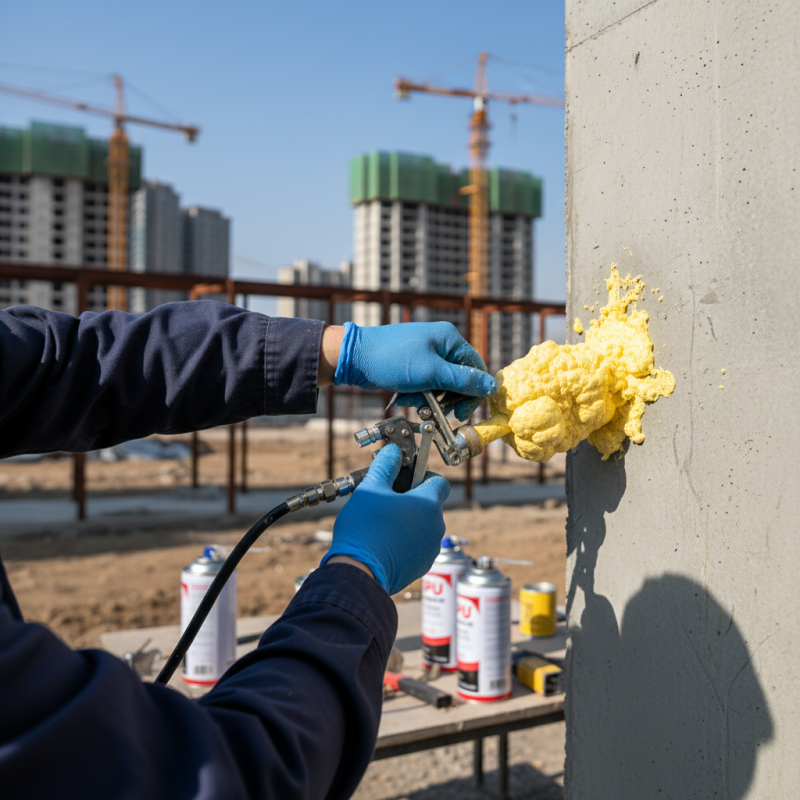
Top 5 Tips for Choosing Pu Sealant Foam in China?
Choosing the right Pu Sealant Foam In China can be overwhelming. With numerous options available, making an informed decision is essential. PU sealant foam is widely used in construction and insulation. Its effectiveness is influenced by quality and application techniques.
When you consider PU sealant foam in China, think about the product specifications. Not all foams are created equal, and understanding the differences can save you time and money. You should also pay attention to the manufacturer's reputation. Reviews and certifications provide insights into reliability and performance.
Lastly, consider your specific project needs. Whether it's insulation or sealing, the right PU sealant foam can make a significant difference. Evaluate how each option aligns with your requirements. Mistakes can happen, and reflecting on past experiences can lead to wiser choices in the future.
Understanding the Basics of PU Sealant Foam and Its Applications
PU sealant foam is a versatile material widely used in construction and insulation. Its unique properties provide excellent adhesion, flexibility, and resistance to moisture, making it suitable for various applications. Builders often use it for sealing gaps and joints in walls, windows, and doors. This foam helps improve energy efficiency by preventing air leaks.
Understanding the basics of PU sealant foam is crucial for making informed choices. Different formulations offer varying performance characteristics. Some foams expand after application, filling larger voids. Others provide a firmer structure, ideal for specific tasks. It's important to assess project needs carefully. Misapplication can lead to ineffective sealing or structural issues. Always consider the curing time and environmental conditions.
When selecting PU sealant foam, examine the technical specifications. Seek products with good thermal insulation properties. Consider how well the foam adheres to different surfaces. Compatibility with surrounding materials is vital. Testing a small area can provide insights into the performance. Evaluate your expectations and be prepared for adjustments.
Key Factors to Consider When Selecting PU Sealant Foam
When selecting PU sealant foam in China, it's crucial to consider several key factors. Firstly, the foam's density significantly influences its performance. A higher density foam offers better insulation and durability. According to industry reports, a density range of 30-40 kg/m³ is optimal for most applications. This density provides a balance between flexibility and strength, ensuring long-lasting seals.
Another important aspect is the curing time. PU sealants can vary greatly in how quickly they become ready for use. A fast-curing sealant can be advantageous in projects requiring speedy completion. Data suggests that foams with a curing time of 30 minutes to 1 hour are ideal for construction projects, providing adequate time for adjustments.
Moreover, pay attention to the application temperature range. PU sealants are sensitive to temperature during application. Most effective products operate best within 5°C to 30°C. Anything outside this range can lead to poor adhesion or performance issues. Testing a small area can provide insight into how the foam reacts to specific conditions, which is often overlooked but essential for successful application. Reflecting on these factors can lead to better choices in sealant foam selection.
Top 5 Tips for Choosing PU Sealant Foam in China
| Tip Number | Key Factor | Description |
| 1 | Quality Standards | Ensure the sealant foam meets international quality standards such as ISO or ASTM. |
| 2 | Application Type | Choose the right type of PU foam based on whether it is for construction, automotive, or general applications. |
| 3 | Environmental Resistance | Select foams that provide good resistance to moisture, UV radiation, and temperature variations. |
| 4 | Expansion Ratio | Consider the expansion ratio of the foam to ensure it fits the application needs without excess waste. |
| 5 | Cost Effectiveness | Balance quality with cost to ensure maximum value for your investment. |
Evaluating Performance Specifications of PU Sealant Foam Products
When selecting PU sealant foam, evaluating performance specifications is crucial. Understanding insulation properties, adhesion strength, and resistance to environmental factors can significantly impact your project outcomes. Reports indicate that high-quality PU sealants can offer insulation values around R-7 per inch. This superior insulation provides energy efficiency, ultimately reducing costs.
Tip: Always check for compliance with local building codes. Non-compliant sealants might save money upfront but lead to long-term issues.
Another essential aspect is the foam's expansion characteristics. Sealants with controlled expansion minimize unwanted gaps. A study from a leading materials research institute highlighted that controlled expansion foams expand approximately 30% without compromising adhesion. This precision ensures a tighter seal and maximizes durability.
Tip: Analyze application conditions beforehand. Factors like humidity and temperature substantially affect foam performance.
A sealant’s lifespan is another vital consideration. High-performance PU sealants can last upwards of 20 years under typical conditions. However, extreme weather or poor application can reduce effectiveness. Regular assessments of application methods and environmental exposure can help maintain longevity.
Assessing Environmental and Safety Standards for PU Sealants
When choosing PU sealant foam in China, assessing environmental and safety standards is crucial. The production of PU sealants impacts several factors, including indoor air quality and ecological safety.
A recent report from the Chinese Ministry of Ecology estimates that around 40% of PU foam products contain harmful levels of volatile organic compounds (VOCs).
It's essential to check for certifications, such as ISO 14001, which relates to environmental management. Sealants that meet these standards are less likely to release harmful chemicals into the environment. Additionally, consider foam products that comply with GB standards, which set limits on hazardous substances. This creates a safer product for both consumers and the environment.
Small businesses often overlook these details, focusing only on price. However, this can lead to long-term consequences. For instance, using low-quality sealants may save money upfront, but can cause health issues and costly environmental damage later. Choosing PU sealants that prioritize safety and environmental standards is not just a trend; it's a necessity in sustainable building practices.
Identifying Reliable Suppliers and Brands of PU Sealant Foam in China
Finding reliable suppliers of PU sealant foam in China is crucial. Trustworthy sources often have a strong presence and positive reviews. Look for manufacturers with certifications or industry standards. This adds to their credibility and ensures quality products.
Tip One: Research Online. Check forums and industry websites to gather information on potential suppliers. Feedback from previous customers can offer insights into their reliability. It’s vital to be thorough during this step.
Tip Two: Ask for Samples. Before committing, request samples to assess the quality. Experienced suppliers will not hesitate to provide these. Testing samples helps avoid future issues.
Consider their customer service too. Do they respond promptly to inquiries? A responsive supplier is often more reliable. Reflecting on these elements can save you time and money.
Top 5 Tips for Choosing PU Sealant Foam in China
This chart illustrates the importance levels of various factors to consider when selecting PU Sealant Foam in China. Quality and supplier reliability are deemed most critical, while ease of application and environmental impact are relatively less significant but still important factors to keep in mind.