What Are the Top 10 Operation Theatre Surgical Lights?
Choosing the right Operation Theatre Surgical Light is not a matter of selecting the brightest fixture. Surgeons need steady illumination, accurate tissue color, controlled shadows, and comfortable visibility during long procedures. A light that looks impressive in a showroom may still create glare, heat, or distracting reflections above the operating table.
This guide examines ten leading surgical lights through practical operating-room criteria. We consider illuminance, color rendering, color temperature, shadow control, focus adjustment, sterile handles, mounting flexibility, battery performance, and cleaning access. We also examine how each model performs during delicate procedures, where a small shadow can hide a vessel, suture, or tissue boundary. Lighting specialist James R. Benya expresses the central principle clearly: “The best lighting is the lighting you do not notice.” That idea matters in surgery. Reliable light should support concentration rather than demand attention.
The ranking is useful, but it is not absolute. Hospital layout, surgical specialty, ceiling height, maintenance support, and budget can change the final choice. Some models offer advanced controls that staff may rarely use. Others appear less sophisticated but provide dependable daily performance. That is worth remembering.
Our comparison aims to be practical and evidence-informed, not promotional. We highlight strengths, limitations, and details that product brochures often overlook. A perfect Operation Theatre Surgical Light may not exist. The best choice is the one that delivers clear, stable illumination when the room is busy, the procedure is complex, and visual confidence matters most.
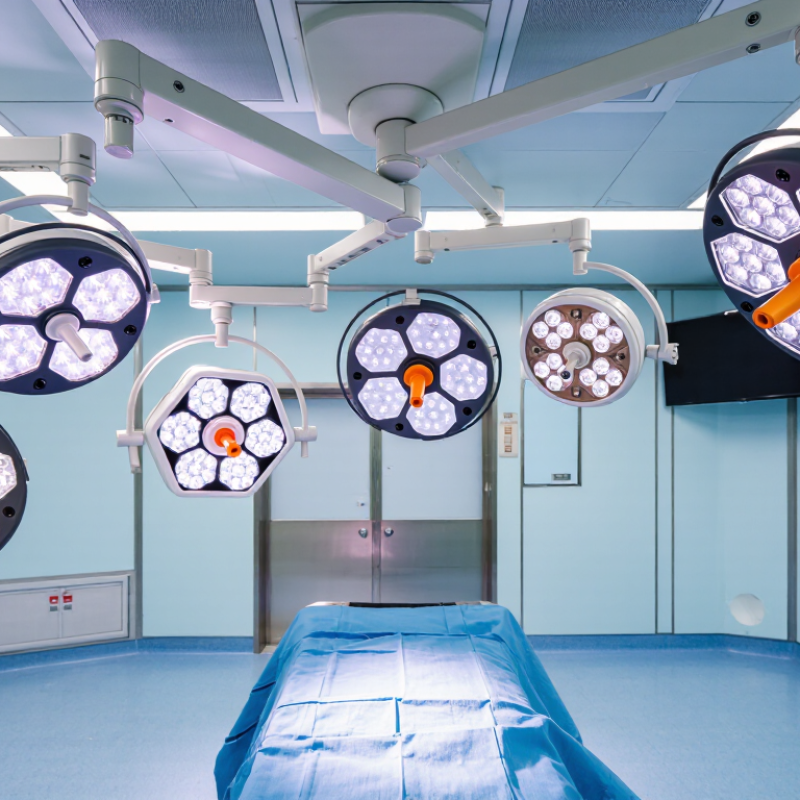
What Surgical Lights Are and Their Role in Operating Theatres
What are the top 10 operating-theatre surgical lights? The better question is what makes a surgical light clinically dependable. Surgical lights provide focused, shadow-reduced illumination over the incision. They also support tissue recognition, instrument handling, and safer communication during long procedures. A poor beam can create glare, eye fatigue, or dark areas around deep wounds.
The top ten choices usually include ceiling-mounted single-head lights, double-head systems, mobile lights, LED lights, and hybrid systems with camera support. Their value depends on more than brightness. Important measures include illuminance, colour rendering, beam depth, heat control, sterile-handle design, and battery backup. The International Electrotechnical Commission addresses safety requirements for surgical luminaires in IEC 60601-2-41. AORN guidance also stresses controlled cleaning, positioning, and staff training.
Small details matter. A surgeon may need to reposition the light several times during abdominal surgery. A sealed surface helps during disinfection. A high colour-rendering beam can make subtle tissue differences easier to judge. According to the World Health Organization’s Global Patient Safety Report 2024, about one in ten patients experiences harm during healthcare, while more than half of this harm is considered preventable. Lighting cannot solve every risk. It can reduce avoidable visual errors when properly installed and maintained. Yet selection is often too specification-driven. Real operating-room trials should matter more than a catalogue rating.
What Are the Top 10 Operation Theatre Surgical Lights? - What Surgical Lights Are and Their Role in Operating Theatres
| Rank | Surgical Light Type | Typical Use | Illuminance Range | Color Temperature | Color Rendering Index | Light Field Diameter | Shadow Management | Typical Mounting | Main Advantage |
|---|---|---|---|---|---|---|---|---|---|
| 1 | Dual-Head LED Surgical Light | Major surgery, general surgery, and procedures requiring two illumination angles | 40,000–160,000 lux | 3,500–5,000 K, adjustable | Ra ≥ 95; R9 typically ≥ 90 | 180–300 mm | Overlapping beams reduce shadows from the surgeon’s hands and instruments | Ceiling-mounted dual suspension arms | Excellent coverage and depth illumination for complex procedures |
| 2 | Single-Head LED Operating Light | Minor surgery, outpatient procedures, and general operating rooms | 40,000–160,000 lux | 3,500–5,000 K, adjustable | Ra ≥ 95; high red-color reproduction | 160–280 mm | Multiple LED modules maintain illumination when part of the beam is obstructed | Ceiling, wall, or mobile stand | Balanced performance, efficient installation, and lower space requirements |
| 3 | Large-Aperture LED Surgical Light | Open abdominal, thoracic, orthopedic, and cardiovascular surgery | 60,000–160,000 lux | 3,800–5,000 K, adjustable | Ra ≥ 95; strong R9 performance | 220–350 mm | Large multi-module optical system provides broad, uniform illumination | Ceiling-mounted articulated arm | Wide field size with high uniformity over deep surgical sites |
| 4 | Deep-Cavity LED Surgical Light | Deep abdominal, pelvic, spinal, and orthopedic procedures | 50,000–160,000 lux | 3,500–5,000 K, adjustable | Ra ≥ 95; enhanced red-spectrum rendering | 180–300 mm | Focused beams and controlled optical overlap improve illumination at depth | Ceiling-mounted suspension system | Improved visibility inside deep and narrow operative cavities |
| 5 | Mobile LED Surgical Light | Procedure rooms, emergency departments, field hospitals, and backup use | 30,000–120,000 lux | 3,500–5,000 K, fixed or adjustable | Ra ≥ 90; premium models reach Ra ≥ 95 | 150–280 mm | Multi-LED design supports shadow reduction from different working positions | Wheeled floor stand | Flexible placement without permanent ceiling installation |
| 6 | Wall-Mounted LED Procedure Light | Minor surgery, treatment rooms, and compact operating theatres | 30,000–100,000 lux | 3,500–5,000 K | Ra ≥ 90; high-quality models reach Ra ≥ 95 | 140–250 mm | Adjustable arm positioning helps maintain the beam around the operating field | Wall-mounted articulated arm | Space-saving solution for rooms with limited ceiling capacity |
| 7 | LED Light with Camera Integration | Teaching hospitals, telemedicine, documentation, and image-guided surgery | 40,000–160,000 lux | 3,500–5,000 K, adjustable | Ra ≥ 95; accurate color reproduction for video | 180–300 mm | Shadow-controlled LED modules preserve a consistent view for the camera | Ceiling-mounted light with integrated camera | Combines surgical illumination with recording and remote collaboration |
| 8 | Battery-Backup LED Surgical Light | Operating rooms requiring continuity during short power interruptions | 40,000–160,000 lux on mains power | 3,500–5,000 K, adjustable | Ra ≥ 95 | 160–300 mm | Multi-source LED optics maintain useful illumination during repositioning | Ceiling-mounted or mobile configuration | Provides emergency illumination when the primary power supply fails |
| 9 | Compact LED Minor-Surgery Light | Dermatology, ophthalmology, plastic surgery, dental surgery, and outpatient care | 20,000–100,000 lux | 3,500–5,000 K | Ra ≥ 90; Ra ≥ 95 preferred for tissue assessment | 100–220 mm | Compact multi-LED arrangement limits central and peripheral shadows | Wall, ceiling, or mobile stand | Efficient illumination for smaller fields and lower-acuity procedures |
| 10 | Hybrid LED Examination and Surgical Light | Preoperative assessment, minor procedures, recovery areas, and multipurpose rooms | 10,000–80,000 lux | 3,000–5,000 K, adjustable | Ra ≥ 90 | 100–220 mm | Adjustable intensity and beam focus support different clinical tasks | Mobile stand or wall-mounted arm | Versatile solution for rooms used for examination and minor surgery |
Note: The specifications shown are typical ranges for modern surgical lighting systems. Actual performance depends on the optical design, configuration, installation height, control system, and applicable medical-device standards.