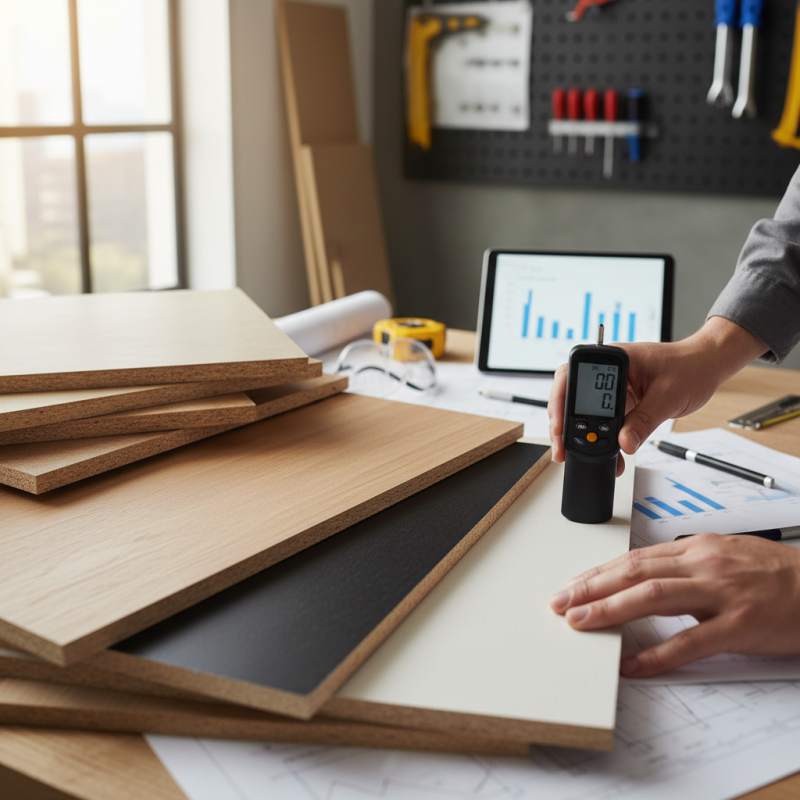
Top 10 Tips for Choosing Fiberboard Medium Density Board?
Choosing the right Fiberboard Medium Density Board can feel overwhelming. Experts like Dr. Emily Chang, a leading authority in composite materials, emphasize the importance of careful selection. She states, "The right fiberboard can make or break your project."
MDF boards are widely used in furniture and construction. Their versatility and durability appeal to many industries. However, not all fiberboards are created equal. Factors such as density, finish, and environmental impact play significant roles in their performance. Consumers should pay attention to these details when making a choice.
Selecting the perfect Fiberboard Medium Density Board requires understanding personal and project needs. Always consider the application before purchasing. What works for one project may not suit another. It’s essential to balance quality with budget. Taking the time to research can lead to better and more informed choices.
Top 10 Tips for Choosing Fiberboard Medium Density Board
Choosing the right fiberboard medium density board (MDF) can significantly impact the quality of your projects. With an increasing demand for durable and sustainable materials in furniture and construction, it’s essential to understand how to select the best options. According to a report by the American Wood Council, the MDF market is projected to grow annually by over 5% due to its versatility and affordability.
Tip 1: Look for certifications. Certified MDF products ensure adherence to quality and environmental standards. Products meeting these standards often have lower formaldehyde emissions. This is crucial for indoor air quality.
Tip 2: Assess the density and thickness. Higher density boards provide better durability and resistance to warping. Depending on your project, a thickness of at least 18mm is usually recommended for robust applications. Many professionals prefer a density range of 600 to 800 kg/m3 for optimal performance.
Tip 3: Check surface finish options. Smooth finishes are ideal for painting and veneering. Rough surfaces might save cost but could demand more prep work. Always weigh the pros and cons of each option before making your decision.
Top 10 Tips for Choosing Fiberboard Medium Density Board
| Tip Number | Tip Description | Considerations |
| 1 | Assess your specific needs | Consider the intended use and required durability |
| 2 | Check density ratings | Higher density often indicates better durability and strength |
| 3 | Evaluate moisture resistance | Choose options with higher moisture resistance for humid areas |
| 4 | Consider environmental impact | Look for sustainable practices and certifications |
| 5 | Review finishing options | Select finishes that match your project requirements |
| 6 | Compare pricing | Get quotes from multiple suppliers to ensure fairness |
| 7 | Check warranty options | A good warranty can provide peace of mind |
| 8 | Seek expert advice | Consult professionals in the field to guide your choice |
| 9 | Research manufacturer reputation | Quality assurance is important for reliability |
| 10 | Plan for delivery and handling | Ensure you have the means to properly handle and store the boards |
Understanding the Basics of Medium Density Fiberboard (MDF)
Medium Density Fiberboard (MDF) is a popular choice in furniture and construction. It is made from wood fibers, wax, and resin, giving it a smooth finish. MDF is versatile and easy to work with, making it a favorite for many projects. Understanding its core properties helps in making informed decisions.
When choosing fiberboard, consider thickness. Thicker boards are stronger and resistant to warping. For furniture, 18mm is often ideal. Pay attention to the density of the board. Higher density usually means better durability. Also, check for certifications. These assure quality and environmental safety.
Evaluate the finish of the MDF. A good surface ensures a polished look after painting or veneering. Ensure it’s suitable for your intended use. For cabinet doors or intricate designs, opt for high-quality MDF. This guarantees longevity and performance. Think about how it will be used. If the application requires heavy loads, rethink your choice. Reflect on your project needs and make adjustments as necessary.
Key Performance Characteristics of Fiberboard for Optimal Selection
When selecting fiberboard medium density board (MDF), understanding its key performance characteristics is crucial. MDF is widely recognized for its smooth surface and versatile applications. According to industry reports, MDF exhibits a density range of 600-800 kg/m³, making it both lightweight and strong. It is commonly used in furniture, cabinetry, and decorative applications.
One essential characteristic is moisture resistance. Different grades of MDF are available, offering various levels of resistance to moisture. For areas prone to humidity, consider opting for moisture-resistant variants to ensure durability. The thickness of the board also affects its structural integrity. Standard thicknesses vary from 3 to 25 mm, impacting how well the board will withstand wear and tear.
Another tip is to evaluate the formaldehyde emissions during selection. Low-formaldehyde options are available and meet stringent environmental standards. This is crucial for indoor applications, where air quality can be compromised. Selecting the right grade can enhance both safety and comfort in living spaces. Always review technical data sheets to compare performance characteristics across different products.
Evaluating Environmental Impact: Choosing Eco-Friendly MDF Options
When selecting Medium Density Fiberboard (MDF), environmental impact plays a significant role. Many consumers today prefer products sourced sustainably. According to the Forest Stewardship Council (FSC), wood from responsibly managed forests helps protect ecosystems. MDF can be made from recycled materials, reducing waste and conserving natural resources.
Selecting eco-friendly MDF options involves understanding the manufacturing process. Traditional MDF often uses formaldehyde-based adhesives, which can emit harmful VOCs. Reports show that low-VOC options are gaining traction. They improve indoor air quality and contribute to a healthier living environment. The global market for eco-friendly building materials is projected to reach $680 billion by 2027, revealing consumer demand for sustainability.
However, the availability of these eco-friendly options can vary widely. Some regions lack access to certified products. It's essential for consumers to research suppliers. Materials need proper certifications confirming their environmental claims. Relying solely on marketing slogans may not always be wise. Checking for certifications like FSC or Greenguard provides better assurance of eco-friendliness. Consider the long-term impact of your choices, both on the environment and on human health.
Comparing Costs: Analyzing Price vs. Quality in MDF Choices
When evaluating medium density fiberboard (MDF), cost and quality are crucial. MDF provides a balanced combination of affordability and reliability. Yet, not all options offer the same value. Quality can vary, impacting longevity and performance. Cheaper boards may save you money upfront but cost more in the long run if they fail.
Look for the density and thickness of the MDF. Higher density typically means better durability and resistance to wear. It can handle moisture and temperature changes better than low-density options. Consider how you plan to use the board. If it's for furniture or cabinetry, investing in higher quality makes sense.
Also, check the environmental impact. Some MDF contains harmful chemicals. More expensive boards might use safer adhesives and processes, making them a better choice for health-conscious consumers. Pricing can serve as a guide, but paying more doesn't always equate to better quality. Experiment with different options to find what works best for your specific needs.
Conclusion
When selecting Fiberboard Medium Density Board (MDF), it's essential to understand its fundamental properties, as well as the performance characteristics that influence its suitability for various applications. Key factors to consider include density, thickness, and surface finish, which can significantly impact durability and usability.
Furthermore, evaluating the environmental impact of different MDF options is crucial for eco-conscious consumers. Opting for products that are certified as eco-friendly can help in making a sustainable choice. Additionally, it is important to analyze the cost of Fiberboard Medium Density Board without compromising on quality. Familiarizing yourself with industry standards and certifications can ensure that you are investing in reliable and safe products, providing peace of mind in your selection process.