Why Choose Low Frequency Pure Sine Wave Inverter at Canton Fair?
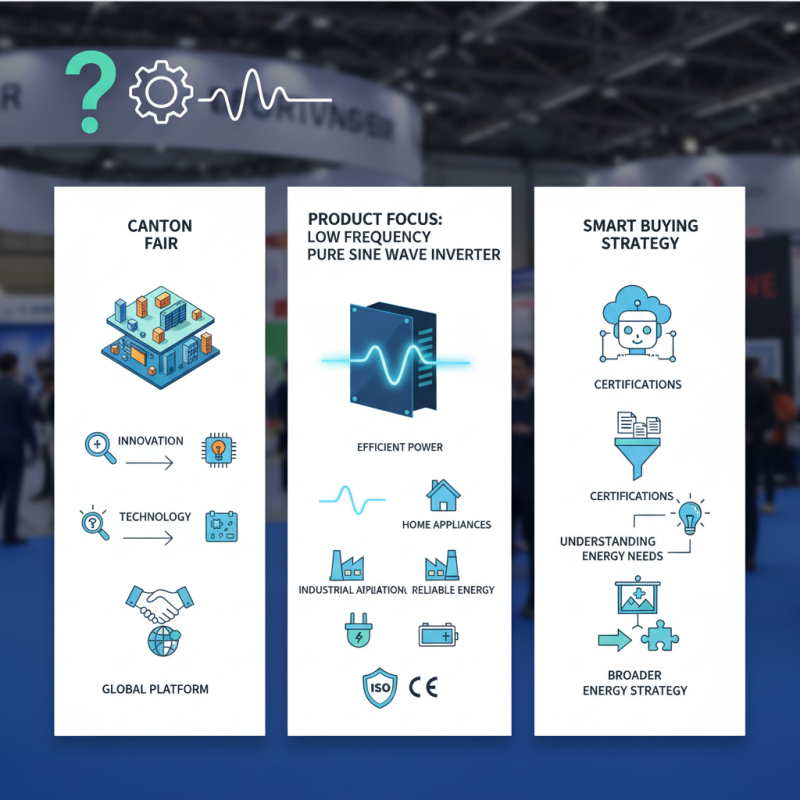
The Canton Fair serves as a significant platform for innovation and technology. Among many exhibits, the Low Frequency Pure Sine Wave Inverter stands out for its unique advantages. This inverter ensures smooth and efficient power conversion, making it essential for various applications.
Visiting the fair allows buyers to discover the latest advancements in manufacturing and electronics. The emphasis on high-quality home appliances and advanced materials makes this event a prime opportunity. Buyers seeking reliable energy solutions, like the Low Frequency Pure Sine Wave Inverter, can benefit from AI-powered tools. These tools help identify suppliers who meet specific certifications, such as ISO and CE.
Despite its many advantages, some buyers may overlook the inverter's potential in certain contexts. Poor understanding of energy needs can lead to mismatched applications. Exploring how the Low Frequency Pure Sine Wave Inverter fits into a broader energy strategy is crucial. Reflection on these aspects can enhance decision-making processes at the fair.
Understanding Low Frequency Pure Sine Wave Inverters
Low frequency pure sine wave inverters stand out in today's market. These devices are designed to provide high-quality, stable power. They are vital in applications where sensitive electronics are involved. Compared to modified sine wave inverters, pure sine wave options deliver smoother energy. This results in better performance for devices like TVs, computers, and audio equipment. Industry reports suggest that the demand for sine wave inverters will grow by 15% annually.
Low frequency inverters operate efficiently under heavy loads. They often come with features like longer battery life and built-in protection from overload. A recent research paper highlighted that users prefer these inverters for their durability and reliability in various conditions. However, low frequency inverters can be bulkier and more expensive than their counterparts. Choosing the right inverter involves understanding your specific needs.
Tip: When selecting an inverter, consider the total load you need to power. It’s essential to assess your energy requirements thoroughly. Tip: Always check the inverter's efficiency rating to ensure optimal performance. You might find that some models, while initially appealing, may not meet your long-term power needs.
Benefits of Low Frequency Pure Sine Wave Inverters for Various Applications
Choosing low frequency pure sine wave inverters offers numerous benefits across various applications. These inverters produce a smooth and continuous waveform. This results in better performance for sensitive electronics. Devices like computers and medical equipment thrive on stable power. Harmonic distortion is minimized, enhancing efficiency. Reports indicate that pure sine wave inverters reduce operational costs by as much as 30% over time.
A significant advantage lies in their durability. Low frequency inverters typically have larger transformers. This design allows them to handle increased loads without overheating. They also offer a longer lifespan compared to their high-frequency counterparts. The market data shows that low frequency models can last up to 15 years with proper care. This longevity is beneficial for both industrial and residential users.
Tips: Regular maintenance is key. Check connections and clean components. This helps prolong the inverter's life. Also, consider ambient temperature. Excessive heat can affect performance. It's essential to ensure proper ventilation. Remember, investing in quality means investing in peace of mind.
Benefits of Low Frequency Pure Sine Wave Inverters
Key Features to Consider When Choosing Inverters at Canton Fair
When attending the Canton Fair, selecting a low frequency pure sine wave inverter is crucial. These inverters provide stable voltage and clean power output, essential for sensitive electronics. One key feature to consider is the inverter's power rating. Ensure it meets your energy needs without risk of overload. Look for models that handle variable loads effectively.
Battery compatibility is another important factor. Not all inverters work with every battery type. You want one that matches your existing battery system. Poor compatibility can lead to inefficiency and short lifespan. Capacity is essential; purchasing a model with inadequate capacity may result in frequent shutdowns or malfunctions.
**Tips:** Check for user reviews on performance. Real-world experiences can highlight potential issues. Also, don’t overlook the importance of warranty. A reliable warranty reflects the manufacturer’s confidence in their product. Lastly, consider the physical size. Space might be a limitation, and oversized inverters can create installation challenges. Make sure it's a suitable fit for your setup.
Why Choose Low Frequency Pure Sine Wave Inverter at Canton Fair? - Key Features to Consider When Choosing Inverters at Canton Fair
| Feature | Description | Advantages |
| Pure Sine Wave Output | Produces a clean, smooth wave form that closely resembles utility power. | Supports a wide range of sensitive electronics, toaster, and motor-driven appliances. |
| Low Frequency Design | Operates at lower frequencies (50Hz or 60Hz). | Generally more robust and suitable for heavy-duty applications. |
| Efficiency Rating | High efficiency in converting DC to AC power. | Reduces energy wastage and saves on operational costs. |
| Overload Protection | Built-in safeguards to prevent damage from overloads. | Enhances the lifespan and reliability of the inverter. |
| Compact Design | Space-efficient and easy to install in various settings. | Ideal for residential and commercial use with limited space. |
Comparative Analysis: Low Frequency vs. High Frequency Inverters
When comparing low frequency and high frequency inverters, several factors come into play. Low frequency pure sine wave inverters operate at a frequency of 50Hz or 60Hz. This allows for a stable output, which is critical for sensitive electronic devices. In contrast, high frequency inverters work at higher frequencies. They can be more compact and lighter but may not deliver as consistent a power supply.
One key difference lies in the efficiency of power conversion. Low frequency inverters often feature larger transformers. These transformers result in better energy conversion and can handle heavier loads. However, they are bulkier and can be less convenient for portable applications. High frequency inverters, while more lightweight, sometimes struggle with surge loads. This can be an issue if the inverter isn’t designed for high-demand devices.
Selecting the right inverter ultimately depends on user needs. Depending on the application, one type may significantly outperform the other. There's always room for improvement in both technologies. Each has its strengths and weaknesses, so a thoughtful approach is necessary. Balancing size, efficiency, and reliability is key to making the best choice.
Strategies for Networking with Inverter Manufacturers at Canton Fair
The Canton Fair is a hub for networking, especially in the inverter sector. Engaging with manufacturers can help you understand trends and technologies. According to a 2023 industry report, the adoption of pure sine wave inverters has increased by 45% among consumers, driving demand. This creates a need for deeper connections with manufacturers.
When networking, focus on key features of low frequency pure sine wave inverters. Many manufacturers are now keen on reducing production costs while maintaining high efficiency. Statistics suggest that these inverters can provide 10-15% higher efficiency than traditional models. Use this knowledge to have informed discussions.
However, don't overlook the nuances in inverter technology. Some manufacturers may offer lower quality products. This necessitates critical conversations about performance metrics and warranties. Walk through product specifications together. Ask questions. The more you engage, the clearer your understanding will become. A proactive approach will yield better results in establishing strong connections.