Choosing composite doors for international projects requires more than comparing colors, prices, and catalogue images. Climate, security, installation quality, and lifecycle performance all matter. The International Energy Agency’s Buildings 2023 report states that buildings consume about 30% of global final energy and create roughly 26% of energy-related emissions. A well-specified entrance door can support better thermal control, especially in homes exposed to cold winds, strong sunlight, or heavy rain.
This guide examines doors composite solutions through measurable criteria. These include U-value, weather resistance, core density, frame construction, threshold design, hardware durability, and available certification. The World Window and Door Market report by Freedonia also highlights renovation, energy efficiency, and construction activity as major market influences. However, market forecasts cannot replace product testing. Local wall thickness, drainage details, and installer experience may change the final result.
Building-science expert Joseph Lstiburek offers a useful principle: “A building is a system.” That idea applies directly to composite entrance doors. A strong slab may still perform poorly with an unsuitable frame or careless fitting. Small gaps matter.
No checklist is perfect.
Global buyers should request test evidence, warranty terms, maintenance instructions, and replacement-part availability. They should also confirm whether performance values follow recognized standards, such as EN, ASTM, or equivalent local requirements. A cheaper door may appear attractive initially, yet freight damage, unclear documentation, or difficult after-sales service can increase the real cost. The right selection balances tested performance, regional suitability, supplier reliability, and practical installation experience.

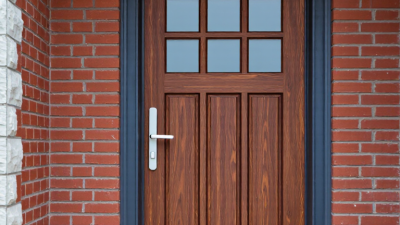
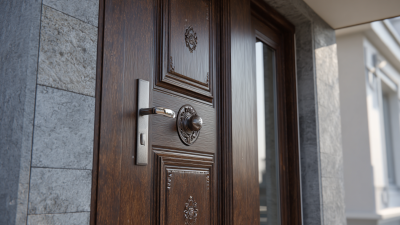
Composite doors combine several materials into one engineered door leaf. A typical design uses a solid insulating core, a moisture-resistant frame, and durable outer skins. These layers work together, rather than relying on one material alone. The surface may imitate painted timber, smooth laminate, or textured wood grain. It feels solid. More importantly, it should remain stable through daily use and changing weather.
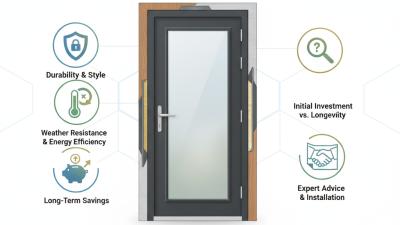
Global buyers often choose composite doors for their balance of insulation, security, and low maintenance. In cold regions, a properly fitted door can reduce drafts around the entrance. In hot or humid areas, sealed edges and suitable finishes help limit swelling and surface damage. A household may clean the door with mild soap instead of repainting it every year. That practical difference matters to landlords, builders, and homeowners managing long-term costs.
Selection still requires careful judgment. Buyers should check the core material, frame construction, weather seals, hinge quality, and tested performance data. Local installation standards also matter, because a well-made door can perform poorly when the opening is uneven. Do not judge quality from a showroom surface alone. Ask for thermal values, water-resistance evidence, security testing, and maintenance instructions. Some composite doors look highly convincing but feel less refined in operation. This is an easy detail to overlook. A reliable supplier should explain these limitations clearly, not promise identical performance in every climate.
Composite doors combine several materials, so buyers should inspect the structure, not only the surface finish. Common designs use a GRP or fiber-reinforced skin, a timber or engineered-wood frame, and a polyurethane foam core. Steel reinforcement may improve stability and resistance against forced entry. However, heavier construction does not automatically mean better insulation.
Core design controls thermal performance. A continuous foam core reduces cold bridges, while poorly sealed glazing areas can weaken the whole door. The International Energy Agency reported in 2023 that buildings consume about 30% of global final energy. This makes low U-values increasingly important in colder markets. Ask for tested U-values, not estimated figures. ISO 10077-1 provides a recognized method for calculating thermal transmittance.
Weather performance also varies. Flush panels usually offer fewer leakage points than heavily decorative designs. Compression seals must remain flexible around the frame. Test documents should cover air permeability, watertightness, and wind resistance under EN 12207, EN 12208, and EN 12210 classifications. Acoustic ratings matter near airports or busy roads, but glass and installation gaps can reduce real performance. Field problems often come from incorrect fitting, not the door alone. This detail is easy to overlook. Fire, security, and accessibility requirements also differ by country, so local certification should be checked before purchase. A beautiful door can still perform poorly when its frame, threshold, or drainage design is unsuitable.
Composite doors must match the local climate and the building’s actual exposure. Climate comes before colour. In coastal regions, salt air can attack hardware, seals, and decorative finishes. Specify corrosion-resistant fittings and tested weather seals.
In humid areas, check water penetration results and threshold drainage. Composite materials resist moisture well, but poor installation can still cause swelling, leaks, or alignment problems.
NOAA’s 1991–2020 Climate Normals help buyers compare local temperature, rainfall, and wind patterns. ASHRAE Standard 169-2021 also classifies climate zones for building design. Use these references when selecting insulation, glazing, and door thickness.
A well-fitted entrance door supports lower heating and cooling demand, although one door cannot fix an inefficient building envelope.
Ask for tested U-factor, water resistance, wind-load, and air-infiltration values.
Confirm the test standard and climate conditions.
Measure the opening twice, especially in older masonry.
Leave suitable expansion space.
Check threshold height against local rainfall and accessibility needs.
Avoid choosing the thickest door automatically; weight, hinges, frame strength, and daily use must match.
A perfect specification is rarely perfect.
Local installer feedback may reveal problems that laboratory figures miss.
Global buyers should compare composite-door suppliers through documents, not polished samples. Ask for factory quality records, material specifications, test reports, and recent project references. A certificate proves a scope, not every door. Check whether ISO 9001 covers the manufacturing site and whether EN 14351-1 performance data matches the supplied model. For fire, weather, acoustic, or security claims, request reports for the complete door assembly, including frame, glass, hinges, and lock.
Energy performance deserves practical attention. The International Energy Agency’s Buildings 2023 report states that buildings consumed about 30% of global final energy in 2022. Request U-values, air-leakage results, and threshold details. The U.S. Department of Energy also estimates that windows cause 25–30% of residential heating and cooling energy use, reminding buyers that weak openings can undermine efficient walls. Prices should be itemized by leaf, frame, hardware, packaging, testing, delivery, taxes, and replacement parts. Very low quotes often hide missing scope.
Warranty language needs closer inspection. Confirm coverage periods for structure, surface fading, hardware, seals, and moisture damage. Ask who pays freight and labor when a defect appears. Coastal exposure, incorrect installation, and unauthorized modifications may be excluded. A ten-year warranty can be weaker than a two-year warranty if claims require difficult evidence. I would also request a written response time. Some suppliers promise quality, yet provide no repair process. That gap matters. Personally, I would not approve a large order from a supplier unwilling to send a production sample and a batch-traceability record.
Use this comparison as a practical screening framework. Price ranges are indicative USD estimates for a standard single exterior door leaf, excluding international freight, taxes, installation, hardware upgrades, and special sizes. Certification and test requirements must be confirmed for the destination market and the exact door configuration.
| Evaluation Dimension | What to Check | Common Evidence or Standard | Basic Specification | Performance Specification | Premium / Project Specification | Buyer Verification Method |
|---|---|---|---|---|---|---|
| Supplier Quality System | Whether production, inspection, corrective action, and traceability are controlled consistently. | ISO 9001 Quality-management certification, factory audit, inspection records | Documented internal quality checks; limited third-party audit history | Certified quality-management system and batch inspection records | Certified system, traceable components, corrective-action reports, and independent factory audit | Request the certificate number, issuing body, scope, validity date, and a recent audit summary. |
| Door Construction | Core material, skin or facing, frame, reinforcement, threshold, seals, and drainage design. | Technical drawing, bill of materials, sample cross-section, material declarations | Insulated foam core, standard decorative facing, basic frame reinforcement | Higher-density core, reinforced lock zone, multi-point-compatible frame, improved seals | Engineered core, reinforced steel or composite sections, thermally broken threshold, replaceable seals | Compare the approved drawing with the production sample and packing list. |
| Thermal Performance | Whole-door U-value, not only the panel value; frame, glazing, threshold, and edge effects should be included. | Thermal test report or calculation to the applicable regional method; declared U-value in W/m²·K | Typically around 1.8–2.2 W/m²·K for a standard insulated door assembly | Typically around 1.2–1.7 W/m²·K with improved core, seals, and threshold | Typically below 1.2 W/m²·K when the complete tested assembly supports the claim | Check that the report covers the complete door size and configuration being purchased. |
| Air, Water, and Wind Performance | Resistance to air leakage, water penetration, and wind pressure under the intended climate conditions. | EN 12207, EN 12208, EN 12210, or relevant ASTM test methods such as E283, E331, and E330 | Suitable for sheltered or moderate exposure; basic weather seals | Tested assembly with continuous seals and improved threshold drainage | Higher tested classifications for coastal, high-rise, exposed, or severe-weather applications | Ask for the test size, laboratory, test pressure, classification, and exact hardware configuration. |
| Security Performance | Lock system, cylinder protection, hinge security, glazing retention, frame anchoring, and resistance to forced entry. | EN 1627–EN 1630 resistance classification where applicable; hardware test documentation | Single-point or basic multi-point lock with standard cylinder protection | Multi-point locking, reinforced keep area, security cylinder, and hinge-side protection | Independently tested security assembly, laminated security glazing, upgraded hardware, and documented installation method | Confirm that the security rating applies to the complete door set, not only the lock. |
| Fire and Smoke Requirements | Whether the door is required to resist fire or limit smoke movement in the destination project. | Applicable local building regulations; EN 16034 or regional fire-test certification where relevant | Non-fire-rated entrance door; no fire claim should be made | Fire-rated option available only with an approved door set, frame, hardware, and closer | Documented fire and smoke performance for the complete tested configuration and approved installation method | Request the complete certificate and verify the permitted size, glazing, hardware, seals, and installation conditions. |
| Market Compliance | Mandatory marking, energy, safety, chemical, and documentation requirements in the destination country. | CE where legally applicable in the EU/EEA; UKCA where applicable in Great Britain; local building-code documents | Basic compliance documents supplied on request | Market-specific declarations, technical file, labeling, and installation instructions | Independent conformity assessment, project-specific documentation, and local regulatory support | Check the legal scope of each mark; a general logo or ISO certificate is not a substitute for product conformity. |
| Surface and UV Durability | Resistance to fading, moisture, scratching, salt exposure, and routine cleaning. | Coating or facing manufacturer data; accelerated weathering or corrosion test evidence where relevant | Standard decorative finish for normal residential exposure | UV-resistant facing, improved edge sealing, and corrosion-resistant hardware options | Marine-grade hardware, enhanced coating system, and documented exposure testing for demanding environments | Review finish samples, care instructions, warranty exclusions, and the approved cleaning chemicals. |
| Customization and Dimensional Control | Available sizes, opening direction, glazing, sidelights, transoms, colors, thresholds, and tolerance control. | Approved shop drawing, dimensional inspection report, color reference, packaging specification | Standard sizes and limited color or glazing choices | Made-to-measure sizes, multiple hardware configurations, and coordinated accessories | Project shop drawings, sample approval, digital production records, and pre-shipment inspection | Approve a final drawing that states dimensions, handing, hardware, glass, finish, and tolerances. |
| Indicative Product Price | Compare the same door size, core, finish, glazing, lockset, threshold, and packaging basis. | Written quotation with Incoterm, currency, validity period, tooling, packing, and payment terms | Approximately USD 250–600 per door set | Approximately USD 600–1,200 per door set | Approximately USD 1,200–2,500+ per door set | Request a line-item quotation; compare landed cost rather than factory price alone. |
| International Logistics | Export packing, pallet dimensions, container loading, moisture protection, breakage risk, and replacement process. | Commercial invoice, packing list, HS classification, Incoterm, loading photos, insurance terms | Standard export carton or pallet packing; buyer manages most destination arrangements | Reinforced packaging, loading plan, shipment tracking, and documented damage procedure | Custom packaging, pre-shipment inspection, cargo insurance coordination, and replacement stock planning | Obtain packaging drawings and clarify responsibility under FCA, FOB, CIF, DAP, or another agreed Incoterm. |
| Warranty Coverage | Length of cover, covered components, labor responsibility, finish exclusions, and claim response time. | Signed warranty document linked to the quotation and product specification | Typically 1–2 years for manufacturing defects; exclusions may cover misuse and installation | Typically 2–5 years for the door assembly, with separate periods for hardware, glass, and finish | Typically 5–10 years for selected components or finish, subject to maintenance and approved installation | Confirm start date, remedy method, freight responsibility, evidence required, and whether warranty is transferable. |
| After-Sales and Spare Parts | Availability of locks, cylinders, seals, hinges, glazing components, touch-up materials, and technical support. | Spare-parts list, service contact, response-time commitment, installation manual | Replacement parts supplied only by special order | Common parts stocked or available within an agreed lead time | Regional service arrangement, long-term parts availability, and documented escalation process | Ask for a written spare-parts lead time and a sample replacement claim procedure. |
| Supplier Risk Score | Overall assessment based on technical evidence, compliance, commercial transparency, and service capability. | Document review, sample inspection, reference checks, factory audit, and pilot order | Low entry barrier; suitable only after independent verification | Balanced option when test reports, warranty, and quality controls are documented | Best suited to regulated projects requiring traceability, testing, and long-term support | Use a weighted score: compliance 25%, performance 25%, quality 20%, total cost 15%, warranty/service 15%. |
Important: Certification, performance class, U-value, fire rating, security rating, and warranty duration are not automatically transferable between models. Always verify the exact door set, dimensions, glazing, hardware, frame, threshold, installation method, and destination-market requirements.
Before ordering, check the door’s U-value, air leakage, water resistance, and security test results. The International Energy Agency reports that buildings consume about 30% of global final energy. A poorly sealed entrance can increase drafts, noise, and heating demand. Ask for tested performance, not marketing language. EN 14351-1 and ASTM E283 are useful references for external doorsets and air leakage. Confirm the test climate, door size, glazing type, and hardware configuration. Results can change between laboratories.
Shipping needs equal attention. Measure the frame, threshold, hinges, and packing space before production. Request moisture protection for every exposed edge. Composite materials resist weather well, but careless storage can still cause swelling or distortion in connected components. I have seen doors arrive safely, then suffer damage from wet floors and missing spacers.
Check the commercial invoice, package labels, delivery photos, and inspection procedure. Small omissions become expensive delays.
Tips: Keep the door flat, dry, and supported at several points. Do not install it immediately after moving it from a cold truck. Let materials adjust to local conditions. During installation, use a level on both jambs and verify the threshold slope. Seal the frame continuously, but avoid blocking drainage paths. The U.S. Department of Energy advises treating air sealing as a key part of building efficiency. Still, installers sometimes focus on foam and forget alignment. That is a practical weakness worth reviewing. Ask for the installation guide in your working language, and record final clearances before handover.