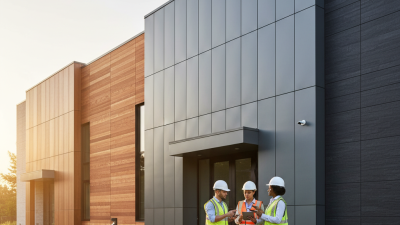
Choosing a cladding sheet supplier is more than a price comparison. The right choice affects weather protection, appearance, installation time, and long-term maintenance. It also depends on details that can be easy to overlook, such as coating thickness, substrate grade, sheet dimensions, and packaging for export.
The International Energy Agency’s Buildings report estimates that buildings accounted for about 30% of global final energy consumption in 2022. It also attributes roughly 26% of energy-related emissions to the sector. These figures cover buildings broadly, not cladding products alone. Still, they show why envelope performance and durable material choices matter. A product’s advertised performance is only useful when its technical documents, test methods, and project requirements align.
For global buyers, supplier checks should include product consistency, inspection records, lead times, shipping protection, and responsive technical support. Ask for clear specifications and samples before committing to a large order. That sounds simple. It is not always simple across markets, where standards, terminology, and delivery conditions differ. A low quotation may omit important details, while a polished catalogue cannot replace verified product information. This guide introduces ten cladding sheet suppliers for international comparison and highlights practical points buyers can assess. No supplier list can predict every project outcome; careful verification still matters.
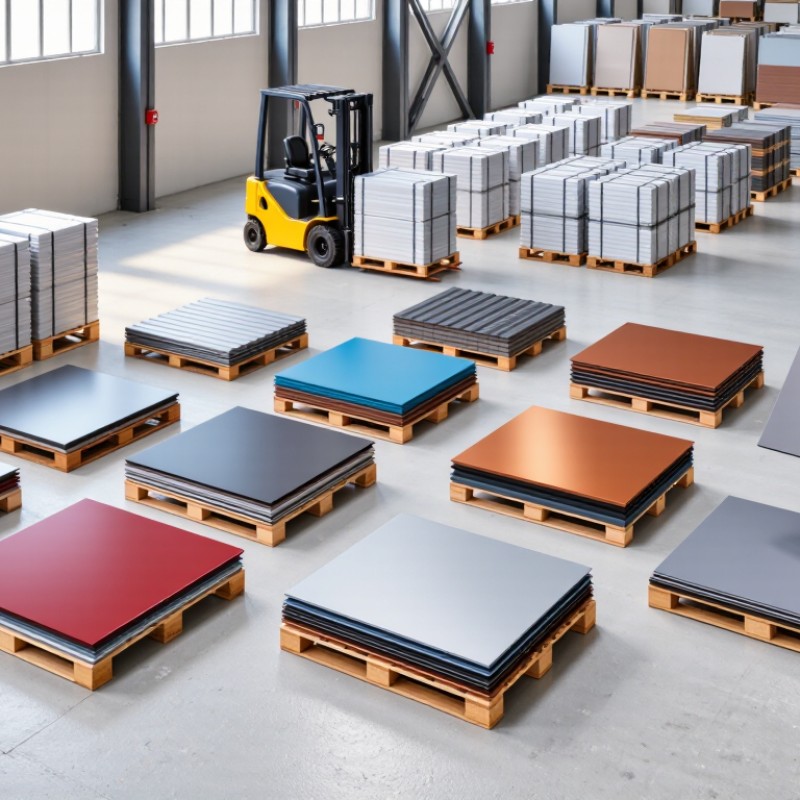
Cladding sheets are factory-made panels fixed to a building’s exterior to protect the wall and shape its appearance. They may be metal, fibre cement, high-pressure laminate, or other materials. Typical uses include warehouses, offices, schools, and housing. Some systems use overlapping sheets; others attach panels to a supporting frame, leaving a drained or ventilated cavity behind them. Small gaps matter.
The choice depends on climate, building use, and the full wall assembly. In coastal areas, corrosion resistance deserves attention; in hot climates, shade and reflective finishes may help limit solar heat gain. The 2023 Global Status Report by the Global Alliance for Buildings and Construction reports that, in 2022, buildings and construction used 34% of global energy demand and produced 37% of energy- and process-related CO2 emissions. These figures cover the whole sector, not cladding alone. Still, envelope design can influence heat flow and operational energy use.
For global buyers, a sheet’s stated performance is only part of the picture. Check thickness, coating, fire-test classification, fixing method, and maintenance requirements against the project specification. Ask how edges, joints, and penetrations are detailed; water often finds the weak spot. That sounds simple. It isn’t always. A panel can perform well in a test and still fail as part of a poorly detailed wall. Confirm that test data applies to the complete assembly, not just a single sheet.
Choosing a cladding sheet supplier worldwide starts with matching the product to the building, not comparing prices alone. Check the sheet material, thickness, coating, finish, and stated tolerances against your project drawings. Ask for current test reports and clear details on how performance was measured. A sample can reveal color and texture, but it cannot prove long-term durability. Look for evidence covering the conditions your project will face, such as coastal air, heavy rain, or strong temperature changes. Small details matter. Confirm that installation guidance, compatible fixings, and maintenance instructions are available in a language your team can use.
Reliable suppliers should explain production capacity, lead times, packaging, and how they track batches. Request references for comparable projects, then verify whether delivery and product quality matched expectations. Check how the supplier handles defects and replacement requests before placing an order. Paperwork alone is not enough; vague answers about quality checks deserve follow-up questions. A well-organized inspection record is useful, but it still may not show what happens during a busy production run. If practical, arrange an independent pre-shipment inspection or agree on a documented inspection plan. Compare quotations only after confirming the same specifications, delivery scope, and payment terms. The cheapest offer may fit, or it may leave costly gaps. It is worth pausing over those gaps.
Global buyers should compare cladding suppliers by material expertise, test data, and delivery capability—not catalogue photos alone. These ten profiles represent distinct supplier strengths: coated-steel specialists, aluminium-panel fabricators, fibre-cement producers, insulated-panel manufacturers, terracotta suppliers, high-pressure-laminate makers, zinc and copper specialists, perforated-screen fabricators, recycled-content producers, and custom roll-forming businesses. Each serves different project needs. Some offer broad colour ranges; others focus on fire performance, weather resistance, or fast installation.
Ask for product declarations, coating specifications, fixing details, and test results. Also check whether samples match production batches. Small differences matter. A finish that looks uniform indoors may vary under strong sunlight. The UNEP 2023 Global Status Report for Buildings and Construction says buildings and construction accounted for 34% of global energy demand and 37% of energy- and process-related CO₂ emissions in 2022. That context makes thermal performance and material durability practical buying criteria, not just design preferences.
The World Green Building Council’s 2019 report, Bringing Embodied Carbon Upfront, estimates that building materials and construction contribute about 11% of global emissions. Buyers can therefore ask suppliers for recycled-content data and product-specific environmental declarations. Claims still need verification. Compare warranties, corrosion resistance, local stock, and replacement lead times alongside price. A low-cost sheet can become expensive when compatible trims are unavailable or delivery slips. Supplier profiles are useful starting points, but project conditions can overturn an early favourite.
A useful supplier comparison starts with the exact system, not a broad catalogue. Check whether a supplier offers metal sheets, solid panels, insulated assemblies, trims, and compatible fixing details. Then ask for technical data for the specified thickness, coating, and substrate. A certificate for one product does not automatically cover another. Small detail, big consequence.
The UNEP and GlobalABC Global Status Report for Buildings and Construction 2022 states that buildings used 34% of global energy and produced 37% of energy- and process-related CO₂ emissions. Cladding is only one part of building performance, but verified thermal and fire data matter. Compare test reports, declared performance, and relevant quality or environmental management certifications. Standards differ by destination market; matching documents to the actual assembly is essential.
Global reach means more than shipping to many countries. Ask about local stock, export packaging, replacement panels, technical support, and realistic lead times. A supplier may have an impressive range yet rely on distant production. That can complicate a tight project schedule. On paper, comparisons look tidy. They rarely are. Check whether samples, production batches, and delivered panels share the same finish and specification, and record any assumptions before procurement.
A useful product-range benchmark for global buyers comparing cladding suppliers. These approximate ranges are material-level estimates, not supplier ratings or guarantees; actual service life depends on specification, installation, exposure, and maintenance.
Ranges shown: aluminum composite panels, 20–30 years; high-pressure laminate, 20–40; fiber cement, 30–50; solid aluminum, 30–50; terracotta, 50–100; zinc, 60–100. Confirm product-specific performance data and applicable certifications with each supplier.
Selecting a cladding sheet supplier starts with a precise specification. Define the metal type, thickness, coating, dimensions, finish, and expected service conditions. Ask for a sample cut from the actual production line, not a specially prepared display piece. Check the edges, coating consistency, and surface marks under ordinary daylight. Details matter. A sample can reveal defects, but it cannot prove every shipment will match.
Request recent test reports and confirm that their scope matches the product you plan to buy. Where possible, verify the issuing laboratory and report number directly. Ask how each batch is identified, inspected, packed, and traced through production. A reliable supplier should explain tolerances clearly and provide written answers, not only sales assurances. Request references from buyers in similar markets, then ask about delivery accuracy and how problems were handled. Check the proposed packaging against your route; dented corners can turn a good sheet into costly waste. Video calls and factory records help, but they are not a substitute for independent checks. Even a careful review can miss something, so record agreed specifications and inspection steps before placing a large order.
This category-based shortlist is a practical starting point, not a ranking of named companies. Select suppliers against the project specification, destination-market rules, and independently verifiable evidence.
| No. | Supplier Category | Typical Products | Potential Project Fit | Evidence to Request | How Buyers Can Verify |
|---|---|---|---|---|---|
| 1 | Insulated metal panel manufacturers | Factory-made metal-faced panels with an insulating core, in specified profiles and thicknesses. | Building envelopes requiring a combined cladding and insulation solution. | Product data sheets, declared thermal performance, fire classification, panel-joint details, and applicable product conformity documents. | Check that test evidence covers the proposed panel construction and thickness. Confirm the relevant market requirements; EN 14509 may apply to self-supporting double-skin metal-faced insulating panels. |
| 2 | Profiled metal sheet manufacturers | Roll-formed steel or aluminum sheets for roofing, wall cladding, and interior lining. | Industrial, agricultural, commercial, and other projects using exposed-fix or similar profiled sheets. | Base-metal grade, coating specification, sheet thickness, profile drawings, tolerances, and corrosion-resistance information. | Compare certificates and sample measurements with the purchase specification. Check whether EN 14782 or another destination-market standard applies to the product and intended use. |
| 3 | Standing-seam system suppliers | Metal panels, clips, flashings, and compatible fixing or joint components. | Roof and facade designs that require concealed fixings or defined seam details. | System drawings, installation instructions, movement allowances, fixing details, and project-relevant structural test reports. | Verify that the evidence relates to the complete proposed system, including panel, clips, supports, and fixing arrangement—not just a sheet sample. |
| 4 | Aluminum composite panel suppliers | Composite panels with aluminum skins and a specified core, supplied in defined finishes and thicknesses. | Facade applications where panel flatness, finish, and fabrication options are important. | Core composition, panel build-up, coating data, fire test reports, fabrication guidance, and traceable production-batch information. | Confirm the exact core and panel configuration covered by fire evidence. Check local facade fire rules and require reports from a competent testing body. |
| 5 | Solid aluminum sheet fabricators | Flat or formed aluminum sheets, cassettes, trims, and custom facade components. | Projects requiring formed metal panels, custom dimensions, or coordinated edge details. | Alloy and temper information, sheet thickness, finish specification, fabrication drawings, and quality-control records. | Review material certificates and inspect a finish sample. Confirm that fabrication tolerances and fixing details match the project design. |
| 6 | Fiber-cement cladding manufacturers | Flat or textured fiber-cement facade boards and related system components. | Ventilated facade and rainscreen projects using board-format cladding. | Product composition, dimensions and tolerances, handling instructions, fixing guidance, and applicable fire and durability documentation. | Check the declared product standard and local approvals. Confirm that cutting, edge treatment, support spacing, and fixing methods follow the tested system details. |
| 7 | High-pressure laminate panel suppliers | Exterior-grade compact laminate panels, available in specified colors, finishes, and formats. | Rainscreen facades where color selection and panel-format flexibility are priorities. | Exterior-use product data, weathering and color information, fire classification, installation details, and maintenance guidance. | Verify that reports identify the exterior-grade product and proposed thickness. Review fixing, ventilation, and edge-clearance requirements for the intended system. |
| 8 | Terracotta and ceramic facade suppliers | Cladding tiles, baguettes, or panels with mechanical support and connection components. | Rainscreen projects seeking ceramic or terracotta finishes and modular facade layouts. | Dimensions, strength and absorption data, color and batch controls, tested fixing details, and system installation documentation. | Request representative samples and confirm that testing covers the selected unit, support system, and fixing method. Check project-specific wind-load design. |
| 9 | Natural-stone panel processors | Cut stone slabs or panels, with specified finishes, dimensions, and anchoring details. | Projects requiring natural stone with project-specific panel layouts and support design. | Stone identification, source and batch traceability, dimensional tolerances, relevant strength data, and anchor or support details. | Inspect samples and confirm the stated stone type and finish. Have panel thickness, anchors, and support design checked for the project conditions. |
| 10 | Cladding system distributors and integrators | Coordinated sourcing of panels, subframes, fixings, trims, and installation documentation from multiple producers. | Buyers who need consolidated procurement or technical coordination across system components. | Manufacturer authorization where relevant, component traceability, full-system drawings, warranty terms, and clear responsibility for technical support. | Identify the actual manufacturer of each component. Confirm compatible components, warranty coverage, delivery responsibilities, and who supports claims or replacements. |
Supplier verification checklist: Check legal business and export documentation, request current references for comparable projects, validate certificates with the issuing body where possible, review warranty exclusions, and approve a representative sample before production. Standards and approvals depend on the product, application, and destination market; confirm applicability with the project designer or local authority.