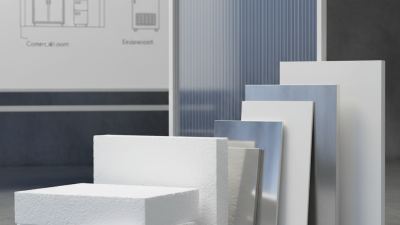
What Are Cooler Panels and How Do They Work?

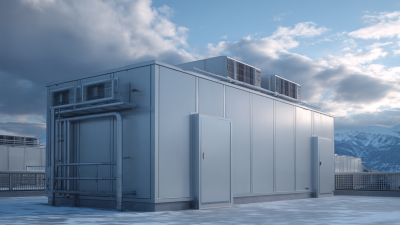
Cooler panels are insulated building components used in walk-in coolers, freezers, cold rooms, and refrigerated facilities. They help maintain stable interior temperatures by slowing heat transfer through walls, ceilings, and doors. Their performance depends on more than thickness alone.

Most cooler panels contain a rigid foam core, often made from polyurethane or polyisocyanurate. Metal skins protect the core and create a clean, washable surface. During operation, the insulation resists heat moving inward, while refrigeration equipment removes the remaining heat. Properly joined panels also reduce air leakage and moisture entry.

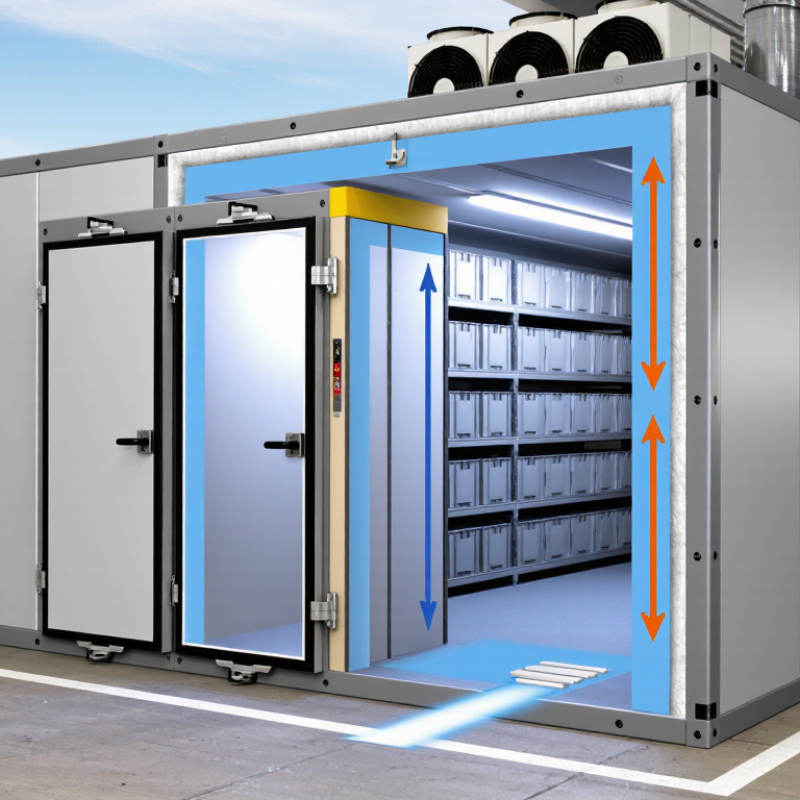
Small gaps matter. A poorly sealed joint can create condensation, frost, or unexpected energy loss. Experienced installers check panel alignment, cam-lock connections, door seals, and floor transitions carefully. They also inspect vapor barriers, because trapped moisture can damage insulation over time. These details often determine whether a cooling system performs efficiently in daily use.

Still, cooler panels are not a complete refrigeration solution. Their results depend on panel quality, ambient temperature, humidity, loading habits, and equipment sizing. A thick panel may perform poorly if its joints remain open. This point is easy to overlook. Product data should be reviewed against recognized testing standards, manufacturer instructions, and the intended temperature range. In practice, measurements from the finished room are valuable, because real conditions can differ from laboratory claims. Understanding these limitations makes it easier to choose, install, and maintain a dependable cold-storage enclosure.
What Are Cooler Panels and How Do They Work?

Cooler Panels Defined: Evaporative Media with 70–90% Saturation Efficiency

What Are Cooler Panels and How Do They Work?

Cooler panels are evaporative media that cool air as water changes into vapor. Their key measure is saturation efficiency, usually reported between 70% and 90%. ASHRAE’s HVAC Systems and Equipment Handbook defines this value as the percentage of the available wet-bulb temperature difference achieved by the cooler.

Here is a practical example. Outdoor air at 35°C may have a 21°C wet-bulb temperature. At 80% saturation efficiency, the leaving air could reach about 24°C. The calculation is simple, but site conditions are not. Higher humidity reduces evaporation and cooling performance. The U.S. Department of Energy identifies evaporative cooling as especially suitable for dry climates, where it can use less energy than compressor-based air conditioning. That advantage depends on correct airflow, water distribution, and ventilation.

The 70–90% range is useful, not guaranteed. I would not size a system from the headline number alone. Air velocity, panel depth, water quality, and dust loading can change results. Real buildings often perform less neatly than laboratory tests.

Tips: Select media with an appropriate thickness and flute design. Inspect for mineral buildup and uneven wetting. Measure both entering and leaving air temperatures. A low temperature drop may indicate poor airflow, blocked passages, or inadequate water coverage. ASHRAE guidance and local engineering measurements should support final equipment selection.

Panel Materials and Geometry: Cellulose, Aspen, and 50–200 mm Depths

Cooler panels form the working surface inside an evaporative cooling system. Water spreads across the material while air passes through its small passages. Some water evaporates, removing sensible heat from the moving air. The panel does not create cold air by itself. It needs dry outdoor air, steady water flow, and enough ventilation.

Cellulose panels are made from treated, corrugated paper layers. Their folded geometry creates many wetted surfaces without blocking airflow completely. They usually provide consistent saturation when the distribution system is level and clean. Aspen panels use thin wood fibers packed into a porous structure. They can offer good evaporation and a lighter, more open feel, but their shape may vary slightly with moisture and age. That difference matters during inspection.

Depth changes the balance. A 50 mm panel offers lower air resistance and suits systems with limited fan pressure. A 100 or 150 mm panel gives air more contact time and can improve cooling when water distribution is reliable. At 200 mm, performance may increase, but so can pressure loss, drying risk, and maintenance demands. Deeper is not automatically better. Technicians should check airflow, pump delivery, water quality, and bypass gaps rather than trusting thickness alone. A small dry strip can reduce real performance more than a modest material upgrade. My own assessment would never rely on catalog geometry only; seasonal dust, uneven water, and installation errors often change the result.

What Are Cooler Panels and How Do They Work?

Representative evaporative saturation efficiency by panel material and nominal depth

Cooler panels are wetted media that reduce air temperature as water evaporates. Deeper panels generally provide more contact area and longer air–water interaction, which can improve saturation efficiency. Cellulose media are commonly available in depths from 50 to 200 mm, while aspen fiber media are most commonly used at approximately 50 to 100 mm. Actual performance varies with airflow velocity, water distribution, humidity, and maintenance.

How Cooler Panels Work: Water Films, Airflow, and Latent Heat Transfer

What Are Cooler Panels and How Do They Work?

Cooler panels are porous surfaces that cool air through water evaporation. A pump spreads water across the panel, creating a thin, wet film. A fan then pulls warm air through the damp material. As air passes through, some water changes from liquid into vapor. This phase change absorbs heat from the air. The process is called latent heat transfer.

The cooled air leaves the panel with a lower temperature and higher humidity. Performance depends heavily on local humidity. Dry air allows faster evaporation and stronger cooling. In humid conditions, the water film evaporates slowly, so temperature reduction becomes limited. Air speed, panel thickness, water distribution, and airflow resistance also affect results. I have found that uneven wetting can create warm streaks, even when the pump appears to work normally. That detail is easy to overlook.

Tips: Check the entire panel for dry patches. Clean dust and mineral deposits regularly. Measure both temperature and humidity, not temperature alone. Keep airflow steady, but avoid excessive fan speed, which may reduce contact time. Water quality matters too. Hard water can clog pores and weaken distribution. Ventilation is essential because indoor humidity may rise. A simple inspection log can reveal declining performance before the problem becomes obvious. Some designs look efficient on paper, yet real conditions often expose small weaknesses.

Cooling Performance: 70–90% Effectiveness Depends on Wet-Bulb Limits

What Are Cooler Panels and How Do They Work?

Cooler panels, often called evaporative cooling pads, lower air temperature through water evaporation. Warm air passes across wet panel surfaces. Some water changes into vapor, removing heat from the airflow. The process feels like a breeze crossing damp fabric.

Cooling effectiveness is commonly reported at 70–90%. This figure depends strongly on the wet-bulb temperature, not just the outdoor temperature. A cooler cannot reduce air below the ambient wet-bulb limit. For example, air at 35°C with a 24°C wet-bulb temperature has a theoretical cooling limit near 24°C. At 80% effectiveness, the outlet air may reach about 26°C. High humidity narrows this opportunity. Poor airflow, uneven water distribution, dust, and mineral buildup reduce performance further. The percentage is useful, but it is not a promise.

Tips

Check the panel after several operating cycles. It should appear evenly damp, not flooded or dry in patches. Keep airflow within the panel’s rated range. More airflow is not always better. Clean mineral deposits regularly, and measure both inlet and outlet temperatures. A simple reading can reveal disappointing performance. Even experienced installers can overlook humidity changes, so local wet-bulb data deserves attention.

Panel Selection: Compare Airflow, Pressure Drop, Water Demand, and Durability

Cooler panels are porous media that cool air as water evaporates across their surfaces. In practice, panel selection is less simple than choosing the thickest option. ASHRAE Handbook—HVAC Systems and Equipment (2020) reports typical direct evaporative effectiveness of about 70–90%. That range assumes suitable airflow, wetting, and outdoor humidity. A panel may look efficient on paper but perform poorly when water distribution becomes uneven.

Airflow and pressure drop must be evaluated together. A dense panel can provide more contact time, yet it may force a fan to work harder. For a 600-millimeter panel, measure air velocity at the inlet and outlet, then compare the pressure loss with the fan curve. DOE guidance notes that evaporative cooling can use roughly one-quarter of the electricity consumed by comparable refrigerated cooling, but fan power can reduce that advantage. Small changes matter. Dust buildup is often underestimated.

Water demand also affects operating cost and reliability. Check the pump flow rate, evaporation rate, bleed-off requirement, and local water hardness. Mineral scale can block channels and create dry stripes within weeks. Durability depends on frame strength, wetting uniformity, corrosion resistance, and cleaning access. A field inspection should include a flashlight, pressure reading, and visible water pattern. I would not trust a laboratory rating alone. Real sites contain dust, imperfect maintenance, and occasional dry spots. These details deserve more weight than a single efficiency number.

What Are Cooler Panels and How Do They Work? - Panel Selection: Compare Airflow, Pressure Drop, Water Demand, and Durability

Cooler panels, also called evaporative cooling pads, are porous or structured media installed in the air intake of an evaporative cooler. A water distribution system keeps the panel wet while fans draw warm air through it. As water evaporates, it removes heat from the air and lowers the supply-air temperature. Actual performance depends on climate, water quality, pad thickness, face velocity, fan capacity, and maintenance.

Representative Comparison of Common Cooler Panel Materials
Panel Type Typical Construction and Thickness Recommended Face Airflow Typical Pressure Drop Water Demand Durability and Maintenance Typical Applications
Corrugated Cellulose Panel Cross-fluted, resin-treated cellulose sheets.
Common thickness: 100–150 mm.
Approximately 2.0–2.5 m/s
7,200–9,000 m³/h per m² of face area
Approximately 50–100 Pa at about 2.5 m/s, depending on thickness and wetness. Medium to high recirculation requirement.
Typical design range: about 4–8 L/min per m² of pad face area; additional make-up water is required for evaporation and bleed-off.
High cooling efficiency and good wetting. Usually requires seasonal cleaning and replacement when mineral scale, biological growth, or fiber deterioration becomes significant. Commercial buildings, agricultural ventilation, workshops, and packaged evaporative coolers where high cooling effectiveness is important.
Aspen Wood-Wool Panel Thin wood fibers held between retaining screens or frames.
Common thickness: 50–100 mm.
Approximately 1.5–2.0 m/s
5,400–7,200 m³/h per m² of face area
Approximately 20–50 Pa at about 2.0 m/s. Low to medium recirculation requirement.
Typical design range: about 3–6 L/min per m² of pad face area, plus water lost through evaporation and bleed-off.
Low initial cost and low airflow resistance. Fibers can compress, dry out, or degrade more quickly than synthetic media, especially with poor water distribution or outdoor exposure. Residential coolers, temporary installations, low-cost systems, and applications with moderate cooling requirements.
Rigid Plastic Structured Panel Corrugated or honeycomb plastic channels, commonly made from PVC or polypropylene.
Common thickness: 100–150 mm.
Approximately 2.0–3.0 m/s
7,200–10,800 m³/h per m² of face area
Approximately 35–80 Pa at about 2.5 m/s. Medium recirculation requirement.
Typical design range: about 4–8 L/min per m² of pad face area, with water quality strongly affecting scaling and cleaning intervals.
Resistant to rot, moisture, and repeated washing. Plastic channels can accumulate scale, dust, and algae if water treatment and routine cleaning are neglected. Industrial facilities, dusty environments, high-use systems, and installations requiring washable or reusable media.
Fiberglass or Synthetic Fiber Panel Resin-bonded fiberglass or synthetic fiber matrix with a protective frame.
Common thickness: 50–100 mm.
Approximately 1.5–2.5 m/s
5,400–9,000 m³/h per m² of face area
Approximately 40–90 Pa at about 2.0 m/s. Medium recirculation requirement.
Typical design range: about 3–7 L/min per m² of pad face area, depending on surface density and wetting pattern.
Good resistance to moisture and dimensional change. The matrix can become clogged by dust or minerals; inspect regularly and follow the material supplier’s cleaning limits. Systems requiring stable dimensions, moderate durability, and resistance to repeated wetting and drying cycles.
Selection note: Lower pressure drop reduces fan energy, but a panel with insufficient surface area or poor wetting may provide less cooling. When comparing panels, evaluate airflow capacity, pressure drop, water distribution, water quality, maintenance access, expected service life, and the local climate together. The airflow and pressure-drop figures above are representative engineering ranges rather than guaranteed ratings for every panel design.