Top 10 Types of Pipe Fittings for Global Buyers

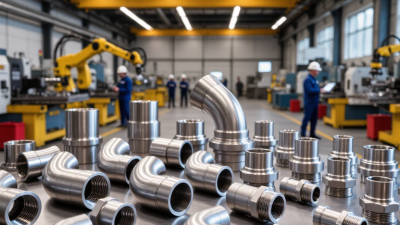
Pipe fittings may look like small components, yet they shape how a piping system turns, branches, connects, and changes size. A wrong selection can create poor alignment, extra pressure loss, or difficult maintenance. Small details matter. This guide introduces ten common types of pipe fittings for global buyers, from elbows and tees to reducers, couplings, and flanges. Each serves a distinct purpose. The right choice depends on the system, not just the catalog photo.

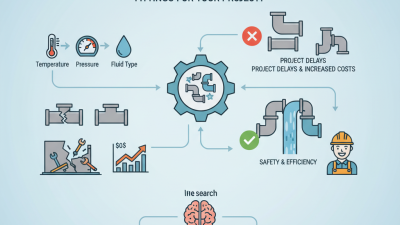
Theodore von Kármán, an influential engineer, famously said, “Scientists study the world as it is; engineers create the world that has never been.” His words are not specifically about pipe fittings, but they capture the practical work of choosing components for real conditions. Buyers should compare material, dimensions, pressure and temperature ratings, connection type, and compatibility with the conveyed medium. Ask suppliers for clear product data and applicable test or quality documents. Check the details. A fitting that matches on paper may still create installation problems if dimensions or connection standards differ. This overview is a useful starting point, not a substitute for project-specific engineering review. No list is perfect. That caveat matters, especially when specifications are incomplete or local requirements vary. The sections ahead explain what each fitting does and what buyers should verify before ordering.
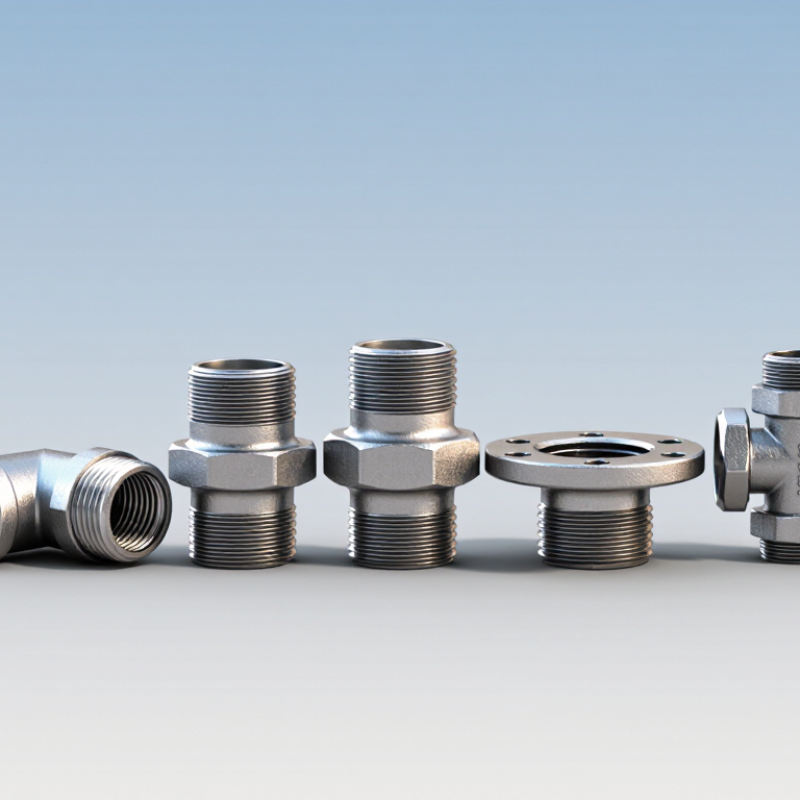
Top 10 Types of Pipe Fittings for Global Buyers

Pipe-Fitting Fundamentals: ASME B16.9 Covers NPS 1/2–48 Butt-Weld Sizes

ASME B16.9 sets dimensional and tolerance requirements for factory-made wrought butt-weld fittings from NPS 1/2 through NPS 48. Its scope includes common shapes such as elbows, tees, reducers, and caps. For a buyer comparing drawings, this standard gives a shared dimensional reference. It does not mean every fitting type is available in every size. Check the specified configuration and supplier documentation.

NPS is a nominal designation, not a direct measurement of a pipe’s outside diameter. For example, NPS 1/2 pipe has an outside diameter of 0.840 inches. Wall thickness still needs to match the piping specification and joining requirements.

That distinction matters. A fitting can meet B16.9 dimensions yet be unsuitable for a particular service because of its material or pressure-temperature limits.

Confirm the project code, material grade, schedule, and end preparation before ordering. Even experienced buyers can rush this check; a quick drawing review may catch a mismatch before fabrication.

Direction-Changing Fittings: 45°/90° Elbows, Tees, and Crosses

Top 10 Types of Pipe Fittings for Global Buyers

Direction-Changing Fittings: 45°/90° Elbows, Tees, and Crosses

Elbows redirect flow around beams, equipment, and tight corners. A 45° elbow changes direction gradually, while a 90° elbow makes a sharper turn. The choice affects layout, pressure loss, and access for maintenance. Tees split or combine flow through a branch. Crosses connect four pipe runs, but their compact shape may complicate inspection and produce more turbulent flow. Small details matter. Check the fitting’s material, pressure rating, wall thickness, and end connections against the pipe and service conditions.

Tips: Measure center-to-face dimensions before ordering, then compare them with the actual installation space. Confirm the required angle and branch size on the drawing. For a crowded route, allow room for supports and tools—not just the fitting itself.

In a real layout, a 90° elbow may fit beside a pump, yet leave little space for a valve or future repair. Moving the line or using two 45° elbows can help, but adds length and joints. That is not always elegant. Buyers should review the full route with the installer and consider flow, support, and maintenance together. A neat drawing does not guarantee an easy installation.

Size and Flow Control: Reducers, Caps, Couplings, and Unions

Reducers adapt a pipeline from one diameter to another, helping connect equipment with different port sizes. Their effect on flow depends on the system, fluid, and reducer geometry. A sudden change can increase turbulence or pressure loss, so check the design conditions rather than choosing by nominal size alone. Concentric reducers suit many vertical runs; eccentric designs can help manage air or liquid pockets in certain layouts. Small details matter.

Caps close an open pipe end, while couplings join two pipe sections of compatible size and connection type. A union also joins sections, but its nut allows easier separation for inspection or replacement. Threaded, welded, and other end styles are not interchangeable. Confirm material, pressure rating, temperature range, and sealing method against the application. A fitting can look right on paper and still be wrong in the field.

Tips: Compare measured outside diameter and thread type before ordering. Check flow calculations when changing diameter. Leave enough clearance to turn a union nut; a few millimeters can matter. Inspect sealing faces and threads before installation. If access is tight, plan maintenance before the line is assembled. That step is easy to overlook.

Top 10 Types of Pipe Fittings for Global Buyers — Size and Flow Control: Reducers, Caps, Couplings, and Unions

Fitting Type Common Configurations Typical Nominal Size Availability* Connection Types Flow and Function Key Selection Considerations
Reducer Concentric or eccentric; reducing diameter from one end to the other Commonly about 1/2–24 in. (DN 15–600), depending on material and construction Butt-weld, socket-weld, or threaded Transitions between different pipe sizes. Eccentric reducers can help maintain a level pipe bottom or top in selected layouts. Specify both end sizes, reducer type, material, wall thickness, and applicable dimensional standard.
Cap End cap for closing a pipe end Butt-weld products are commonly available from small-bore sizes to large process-pipe sizes; range varies by material and supplier Butt-weld, socket-weld, or threaded Closes the end of a pipe run and prevents through-flow at that termination. Confirm pipe outside diameter or nominal size, end connection, wall thickness, and whether future removal is required.
Coupling Full or half coupling; equal-size connection Threaded and socket-weld versions are commonly used from small-bore sizes up to about 4 in. (DN 100) Threaded, socket-weld, or other specified joining ends Joins two pipe sections in a straight line; a coupling itself does not regulate flow. Check whether a full or half coupling is needed, along with thread form, pressure class, and material compatibility.
Union Three-piece fitting with a removable nut or equivalent joining section Commonly about 1/8–4 in. (DN 6–100), depending on connection and material Threaded or socket-weld Connects two pipe ends while allowing the joint to be disconnected for maintenance without rotating the pipes. Useful where access for servicing is important. Verify end connections, seal design, pressure rating, and service conditions.
Elbow Commonly 45°, 90°, and 180°; long- or short-radius options where offered Butt-weld sizes commonly range from about 1/2–48 in. (DN 15–1200); other connections may have narrower ranges Butt-weld, socket-weld, threaded, or flanged Changes flow direction. A smoother-radius design can reduce localized flow disturbance compared with a tighter turn. Choose the angle, radius, size, and pressure-compatible wall thickness required by the piping layout.
Tee Equal tee or reducing tee Butt-weld products commonly cover about 1/2–48 in. (DN 15–1200); size availability varies by type Butt-weld, socket-weld, threaded, or flanged Creates a branch connection. Flow divides or combines depending on system direction and operating conditions. Specify run and branch sizes, equal or reducing configuration, connection type, and design conditions.
Cross Four-way fitting, usually equal or reducing Commonly available in smaller threaded sizes; larger sizes depend on construction and applicable standards Threaded, socket-weld, or other specified ends Provides four intersecting flow paths; actual distribution depends on system design and operating conditions. Check branch sizing, pressure and temperature limits, and whether the application permits the selected four-way geometry.
Adapter Transitions between different end types, such as threaded, socket, hose, or flanged connections Specified by the size of each end; available dimensions vary widely by adapter style Combination of the two required connection types Connects components or piping systems with unlike end connections; the adapter does not inherently control flow. List both end sizes and connection standards, and confirm material, sealing method, and pressure rating.
Nipple Short straight pipe section, commonly threaded at one or both ends Commonly about 1/8–4 in. (DN 6–100); length and end style vary Threaded, plain, or otherwise specified ends Connects two fittings or components, typically in a straight run. Specify nominal size, overall length, thread type, material, and whether the nipple is seamless or welded if required.
Plug Male-threaded closure for a female-threaded opening Commonly about 1/8–4 in. (DN 6–100), depending on material and pressure class Threaded; other designs may be specified for particular ports Closes a threaded port or fitting outlet and stops flow through that opening. Match thread form and size; select a suitable seal and pressure rating for the fluid and service conditions.

Buyer’s note: Size ranges are indicative, not universal. Nominal pipe size does not equal the measured outside diameter. Confirm the governing dimensional standard, material specification, pressure class, temperature limits, and end connections for each project.

End Connections: Nipples, Adapters, and Flanges in ASME B16.5 Classes 150–2500

End connections are small components, but they can decide whether a piping line seals cleanly or leaks under pressure. ASME B16.5 covers flanges and flanged fittings from NPS 1/2 through NPS 24. Its pressure classes include 150, 300, 400, 600, 900, 1500, and 2500. These class numbers are not direct pressure values in psi. Allowable pressure depends on material and temperature, so buyers should check the standard’s pressure-temperature tables for the selected combination.

For nipples, confirm nominal size, schedule, length, material, and end type. A threaded nipple needs compatible thread form and engagement; a bevel-end nipple must match the joining method. ASTM A733 provides specifications for welded and seamless steel pipe nipples, including plain and threaded ends. Adapters need equal scrutiny: verify both connection types, dimensions, and material compatibility before ordering. Small details matter.

Flanges require checks for facing, bore, bolt pattern, and class, not just nominal size. A Class 300 flange may not mate with a Class 150 counterpart, even when both share the same nominal pipe size. That mismatch is easy to miss on a drawing. ASME B16.5 supplies the flange dimensional and rating framework, but it does not standardize every nipple or adapter configuration. Buyers should request dimensional drawings and material certificates, then compare them with the project specification. I would still verify the actual mating parts before installation.

Materials and Buyer Checks: ASTM A234, A403, and A105 Grade Standards

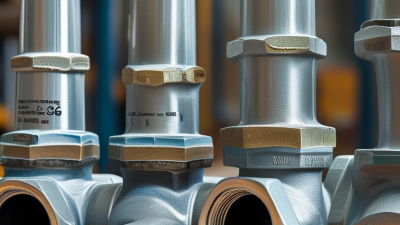
For global buyers, ASTM A234, A403, and A105 identify different materials and manufacturing routes; they are not interchangeable labels. ASTM A234/A234M covers wrought carbon and alloy steel fittings for moderate- and high-temperature service. ASTM A403/A403M covers wrought austenitic stainless steel fittings. ASTM A105/A105M covers forged carbon steel piping components, commonly used in ambient and higher-temperature service. Check the exact specification edition and applicable grade against the purchase order.

Supply context matters, but it does not prove fitting quality. The World Steel Association’s World Steel in Figures 2025 reports 1.88 billion tonnes of crude steel production worldwide in 2024. That scale can support broad material availability, yet a buyer still needs evidence for each lot. Request the material test report and verify the specification, grade, heat number, chemistry, mechanical results, and heat-treatment condition. Match the fitting’s dimensions and wall thickness to the project requirements. Small mismatch, costly rework.

For A105 forgings, confirm the stated forging and testing requirements; for A234 and A403, check that the product form and grade fit the service conditions. Verify traceability from markings to documents, and review impact-test requirements where specified. A paper match is not enough. One detail is easy to miss: corrosion resistance depends on the actual environment, not just the word “stainless.” Ask for clarification when the order documents and certificates differ. I would not assume a familiar grade covers every temperature, pressure, or installation detail.