What Are the Top China PVC Cladding Suppliers?

China remains a major force in global PVC production, processing, and building-material supply. According to Grand View Research, the global PVC market was valued at more than USD 40 billion in 2023. The report also expects steady growth through 2030, supported by construction, renovation, and infrastructure demand. That growth creates opportunities for China pvc cladding suppliers, but scale alone does not prove quality.

Performance matters more.

A reliable supplier should demonstrate stable extrusion control, accurate color matching, and documented weathering results. Buyers should request technical data for impact resistance, flame performance, water absorption, and ultraviolet exposure. China’s GB 8624 classification and relevant ISO, ASTM, or EN testing can provide useful comparison points. However, test certificates must match the actual product, thickness, formulation, and production site. A generic certificate is not enough.

Industry research from Mordor Intelligence and Fortune Business Insights also identifies construction activity and energy-efficient renovation as important PVC market drivers. Yet market reports rarely rank cladding manufacturers with complete accuracy. Their data usually measures market size, applications, or regional demand. Supplier selection still requires factory audits, sample inspections, and independent verification. Do not trust polished catalogs alone. Ask how panels perform after repeated hot summers, heavy rain, and installation movement.

This guide examines leading China PVC cladding suppliers through product range, manufacturing experience, quality systems, customization capacity, export reliability, and technical support. The shortlist may not be perfect. Supplier capabilities can change quickly, and published information may remain incomplete. That limitation deserves attention before any purchasing decision.
What Are the Top China PVC Cladding Suppliers?

What Is PVC Cladding and Where Is It Used?

PVC cladding is a building finish made from polyvinyl chloride panels. The panels create a protective outer layer over walls or ceilings. They are lightweight, moisture-resistant, and easy to wipe clean. That makes them useful in bathrooms, utility rooms, kitchens, and other areas where splashes are common. They also appear on exterior walls, soffits, and porch ceilings, provided the product is rated for outdoor exposure.

Installation details matter. Panels usually attach to battens or a prepared surface, with joints and edges finished to limit water entry. In a bathroom, check that the substrate is sound and that ventilation can remove steam. A smooth panel may look clean, but seams still need careful sealing. Small details count.

PVC cladding can suit renovation projects because panels are often quick to cut and fit. However, it is not a cure for damp walls or poor drainage. Fix the underlying issue first. Performance varies by panel thickness, surface finish, and intended use, so verify product specifications before selecting materials. Some panels can scratch or fade, and repairs may leave a visible mismatch. It is worth handling a sample in the room’s actual light; I have found that colour can look different from a catalogue image.

How to Assess PVC Cladding Suppliers in China

01 Assessing PVC cladding suppliers in China takes more than comparing catalog prices. Ask for technical data sheets that state panel thickness, surface finish, installation method, and recommended use. Then compare samples under consistent lighting. Look closely at color variation, edge quality, and whether the tongue-and-groove joints fit without force. Small details matter.

Request recent production photos and a sample batch, not only polished showroom images. A reliable supplier should explain how it checks dimensions and appearance during production, and what happens when a batch falls outside agreed specifications. Ask for packaging details too: corner protection and moisture barriers can reduce damage during long-distance transport. Clear answers are useful. Vague promises are not.

SUPPLIER CHECK Check whether the supplier can provide repeat samples and keep specifications consistent across orders. If possible, speak with a past customer about communication, lead times, and how problems were handled. Review written quotations carefully, including sample costs, packing, and delivery terms. A low price may leave important details unclear. I would not treat a fast reply as proof of quality; sometimes a thorough answer takes longer, and even a good supplier can make mistakes. What matters is whether the evidence is specific and the response is accountable.

Profiles of Leading China PVC Cladding Suppliers

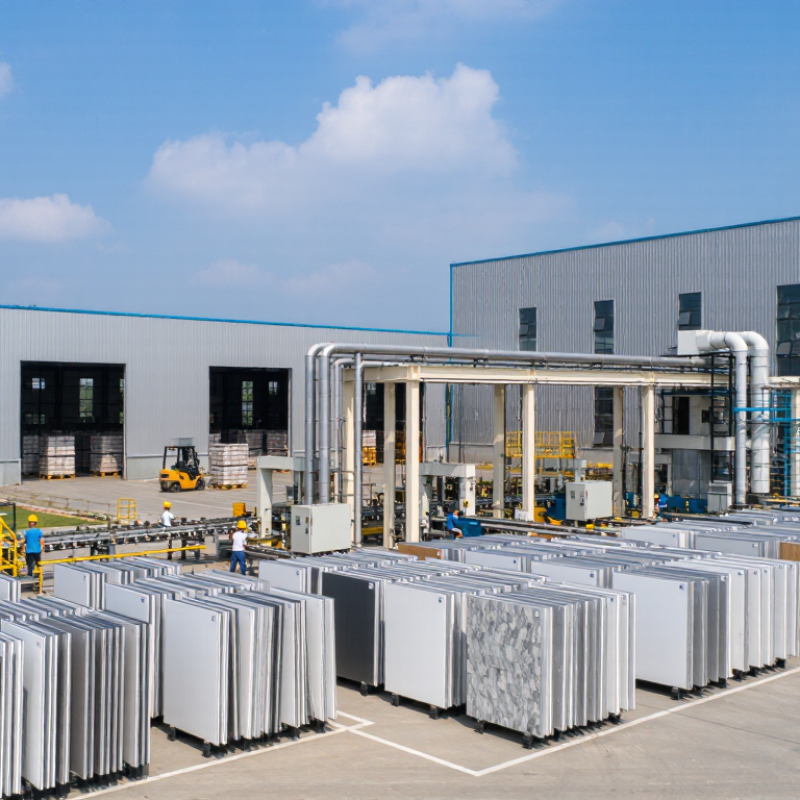
China’s leading PVC cladding suppliers usually fall into three practical groups. Large manufacturers often operate automated extrusion lines and serve high-volume construction projects. Their strength is consistent thickness, stable color, and repeatable surface texture. Specialized fabricators focus on custom profiles, trims, and project-specific dimensions. They may offer better flexibility for unusual walls or renovation work. Export-oriented suppliers typically provide stronger packaging, technical files, and shipment coordination. Their experience can reduce mistakes at ports and during installation.

A reliable supplier should explain the PVC formulation, impact resistance, fire performance, and weathering test method. Ask for recent samples, not only digital images. Check the locking edge, corner trim, and back structure by hand. Good suppliers respond clearly about tolerances and replacement procedures. Factory visits can reveal storage conditions, line cleanliness, and quality inspection habits. Still, no supplier is perfect. Small color differences may appear between production batches. That detail deserves attention.

Tips: Compare at least three suppliers using the same specification sheet. Request a sample panel exposed to sunlight and moisture before ordering. Confirm carton strength, pallet protection, and spare trims. Ask whether the quoted price includes accessories and export packing. A low price may hide thinner walls or weaker surface coatings. Keep written records of approved colors, dimensions, and test documents. This simple step prevents many costly misunderstandings.

How Suppliers Compare in Products and Services

What Are the Top China PVC Cladding Suppliers?

China’s strongest PVC cladding suppliers differ more in execution than appearance. Grand View Research estimated the global PVC market at about USD 45.75 billion in 2023. Construction remains a major demand driver. This makes production consistency important. Ask for thickness records, impact results, and color samples from recent batches. A glossy sample can hide weak formulation.

Product comparisons should include UV resistance, thermal expansion, fire performance, and installation design. Suppliers using PVC-U profiles should provide testing aligned with EN 13245-2 or comparable standards. ASTM D3679 may also support rigid siding evaluations. Fortune Business Insights reports that the PVC market will continue growing through 2032, although forecasts differ by methodology. That difference deserves attention. A supplier quoting only market growth is not proving product quality.

Service often separates reliable exporters from merely competitive factories. Check whether technical staff can review wall movement, drainage gaps, and fastener spacing. Request packaging photos, loading plans, and a written replacement process. Strong suppliers usually offer cutting guidance, color matching, and sample approval before mass production. Their lead-time claims should match recent shipping records. Some suppliers promise broad customization, but small orders may receive less attention. That is a practical weakness worth testing. A trial order can reveal edge damage, profile warping, label accuracy, and response speed before a larger contract.

What Are the Top China PVC Cladding Suppliers? – How Suppliers Compare in Products and Services
Comparison Dimension Standard OEM Supplier Profile Customization-Focused Supplier Profile Project and Export-Focused Supplier Profile
Product formats Typically offers a core selection of PVC wall or ceiling panels. Confirm whether the range includes hollow panels, solid panels, trims, and matching accessories. May offer more profile, surface, or accessory variations. Request a current product catalogue and samples for the specific project. May quote coordinated panel-and-trim packages for larger projects. Confirm that all components are compatible with the selected system.
Dimensions and tolerances Ask for the exact width, thickness, length, usable coverage, and dimensional tolerances for each profile. Confirm which dimensions can be customized and whether tooling or minimum-order conditions apply. Request approved drawings and a written tolerance schedule before production, especially for multi-batch orders.
Finishes and colors Often quotes a defined range of standard colors and surface finishes; availability varies by product line. May offer custom colors, printed patterns, or surface treatments. Confirm color matching method, sample approval, and batch consistency. Can be assessed on its ability to manage finish approvals and maintain consistency across project quantities and repeat orders.
Outdoor durability Ask whether the proposed product is intended for interior or exterior use and request supporting weathering or UV-resistance test information. Confirm whether the formulation or surface finish can be tailored for the intended exposure conditions; request test methods and results. Check that the quoted specification matches the project climate and installation conditions, and that the same specification will be used for each batch.
Fire-performance information Request the exact fire-test report and classification for the specific product, thickness, and finish being quoted. Confirm whether a customized formulation changes the tested product specification or requires new documentation. Check that reports are valid for the destination market and correspond to the supplied product configuration.
Quality control and documentation Ask for the inspection checklist, product specification sheet, and sample approval process. Confirm how custom specifications, approved samples, and production changes are recorded and controlled. Assess availability of batch identification, pre-shipment inspection, packing records, and agreed quality documents.
Customization and tooling Customization may be limited to available profiles, lengths, or finishes; confirm details in the quotation. Compare capability for custom profiles, colors, surface patterns, and packaging. Ask about tooling charges and ownership terms. Confirm how technical changes are handled after drawing approval and how project specifications are protected during repeat production.
Order quantity and lead time Request the minimum order quantity and a production lead-time estimate for the exact product and finish. Ask whether customization changes the minimum quantity or schedule, and whether a pre-production sample is available. Request a production and shipment schedule that accounts for order size, inspection, packaging, and the destination port.
Export packaging and shipping Confirm carton or pallet specifications, loading quantity, and protection against handling or moisture damage. Check whether custom labels, packaging, or mixed-product packing are available and included in the quotation. Evaluate export-document support and confirm shipping terms, packing details, and responsibility for freight and insurance.
Best fit Buyers seeking a straightforward specification and a standard product range. Buyers who need non-standard colors, profiles, finishes, or branding-free custom packaging. Buyers coordinating larger orders, project documentation, inspections, or export logistics.
How to interpret this table These are anonymized supplier-profile archetypes, not rankings or verified records for specific companies. Capabilities vary by factory and product. Compare written quotations, physical samples, product-specific test reports, and agreed specifications before selecting a supplier.

What to Check Before Choosing a Supplier

Before comparing China PVC cladding suppliers, request a specification sheet for the exact profile you plan to buy. Check wall thickness, weight per metre, dimensional tolerances, and the stated PVC formulation. PlasticsEurope’s Plastics – the Fast Facts 2023 reports that building and construction accounted for 23.7% of European plastics converters’ demand in 2022. That scale makes batch consistency commercially important, but it cannot verify an individual factory’s quality. Ask for recent, product-specific test reports covering weathering, impact resistance, and fire performance where relevant. Confirm that the tested sample matches the quoted profile, not merely a similar product.

Ask for batch codes and a written process for handling defects. Then compare a production sample against the approved reference under natural light; small colour shifts can be easy to miss on a screen. Ask for samples. Check that the tongue-and-groove edges fit cleanly, with no brittle corners or visible waviness. A third-party laboratory report can strengthen confidence, but check its date, test scope, and laboratory details. Request references for comparable projects and clarify lead times, packaging, replacement terms, and who pays for damaged goods. I would still inspect the first shipment: paperwork helps, but a neat sample does not guarantee every carton will match.

What to Check Before Choosing a China PVC Cladding Supplier

Recommended procurement weighting for comparing suppliers without relying on brand reputation. Product compliance should be verified against applicable standards such as EN 13245-2, ASTM requirements, and project-specific fire regulations.

The highest priorities are product quality, weather and fire performance, traceable quality control, and the supplier’s ability to provide consistent export documentation and delivery capacity.