China Top Building Cladding Panels Manufacturers

China has become an important sourcing destination for building cladding panels, offering buyers a broad range of materials, finishes, and production capabilities. Yet a polished sample tells only part of the story. Panel performance depends on the complete wall assembly, including insulation, fixings, joints, drainage, and the substrate behind the façade. Small details matter. A narrow sealant joint or poorly coordinated corner can affect appearance and long-term maintenance.

Architectural pioneer Louis Sullivan’s famous principle, “form follows function,” remains useful when evaluating cladding. A façade should support the building’s purpose, not simply look striking in a catalogue. This guide examines Chinese manufacturers through practical criteria: product range, fabrication quality, technical documentation, project experience, customization, and communication. Buyers should also request clear specifications and inspect relevant samples or completed projects where possible. A low quotation may leave important details unresolved. That deserves attention.

The right manufacturer is not necessarily the largest or the cheapest. It is the supplier whose capabilities match the project’s design, climate, installation plan, and maintenance expectations. There is no universal best panel. This overview offers a starting point for comparing China’s leading building cladding panels manufacturers with greater care, while recognizing that supplier claims still need independent verification.
China Top Building Cladding Panels Manufacturers

Building Cladding Panels: Materials and Functions in the Building Envelope

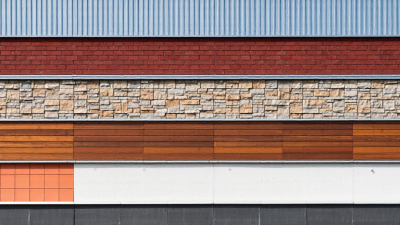
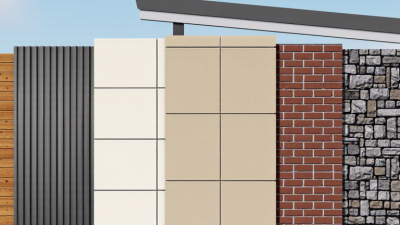
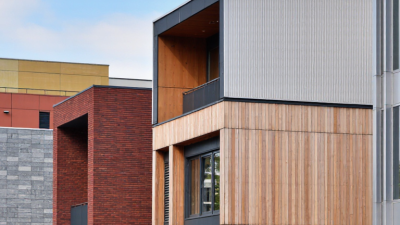
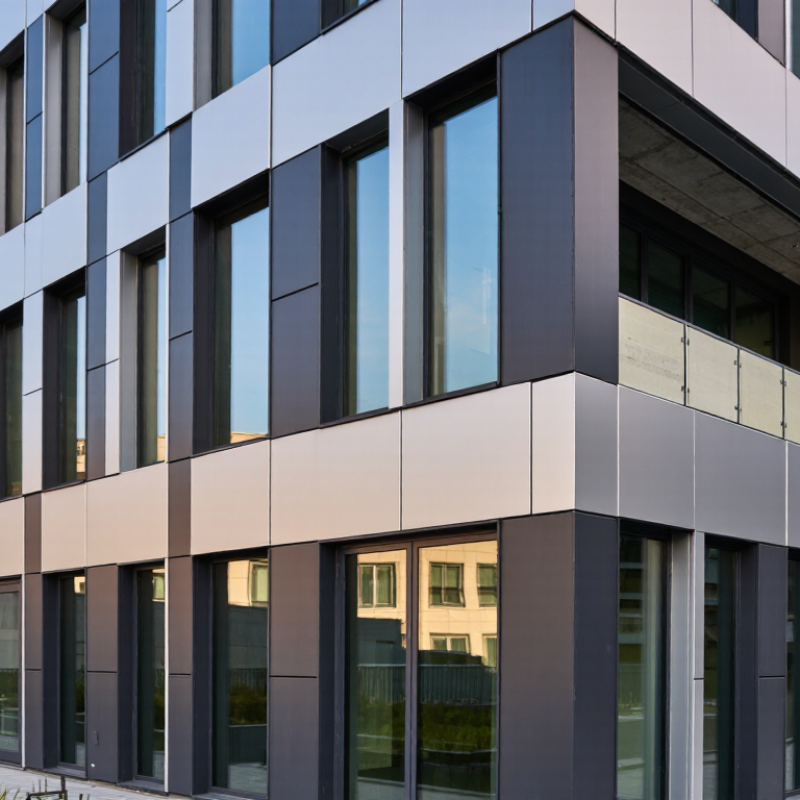
Building cladding panels give a façade its visible finish, but their role is more practical than decorative. Common options include metal, fiber cement, terracotta, stone, and engineered wood. Each responds differently to weight, moisture, sunlight, and temperature changes. A pale metal panel can reflect strong sun, while a textured mineral surface may hide everyday dust more effectively.

In a ventilated rainscreen, panels sit outside a drainage cavity and the building’s insulation. Wind-driven rain can pass behind the outer layer, then drain or dry through the cavity. Flashings, sealed openings, and carefully aligned joints help keep water away from vulnerable edges. Details matter. A small gap near a window can undermine an otherwise well-designed wall.

Panel selection should match the wall assembly and local exposure, not just the sample’s appearance. Coastal air, freeze-thaw cycles, and intense sunlight place different demands on finishes and fixings. Installers also need clear guidance on movement joints, fastener spacing, and replacement access. These details are easy to overlook. Even a durable panel can perform poorly when water has nowhere to go or thermal movement is restrained.

China’s Main Panel Categories: ACP, Solid Aluminum, Fiber Cement, and HPL

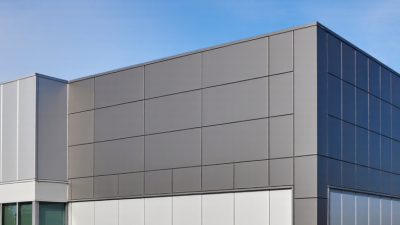
China’s cladding market includes several panel types, each suited to different building conditions. Aluminum composite panels (ACP) have two aluminum skins bonded to a core. They are lightweight and available in many finishes, but core composition and fire performance vary. Solid aluminum panels use a single metal sheet, offering durability and flexibility for formed façades. They may cost more and need careful detailing to control movement.

Fiber cement panels are dense and generally provide a solid, textured appearance. Their weight and edge treatment require attention during handling and installation. High-pressure laminate (HPL) panels offer consistent colors and a refined surface, though exposure, fixing systems, and product specifications affect their suitability. Details matter. No category is automatically best; the façade design, climate, support structure, and maintenance plan all matter.

Tips: Ask manufacturers for current technical data, test reports, finish samples, and installation instructions. Compare panel thickness, core or substrate, fixing method, and warranty conditions—not price alone. Check how exposed edges and joints are finished. One detail is easy to overlook: a sample can look convincing indoors but behave differently after months of sun and rain.

China Top Building Cladding Panels Manufacturers
China’s Main Panel Categories: ACP, Solid Aluminum, Fiber Cement, and HPL

Panel category Typical construction and thickness Key characteristics Common applications Important selection considerations
Aluminum Composite Panel (ACP) Typically consists of two thin aluminum sheets bonded to a core. Common overall panel thicknesses are about 3–6 mm; skin thickness and core composition vary. Lightweight, flat, and available in many colors and finishes. Panels can be routed and folded for cassette-style fabrication. Commercial façades, soffits, canopies, and other exterior or interior cladding applications. Check the core type, fire-test documentation, coating specification, panel thickness, and suitability for the intended building height and local code.
Solid Aluminum Panel A single sheet of aluminum rather than a bonded composite. Architectural panels commonly use sheet thicknesses in the approximate 2–4 mm range, depending on design and support. Non-combustible metal construction, corrosion resistance, and good formability. Can be folded, perforated, or shaped; stiffness depends on thickness and panel geometry. Exterior rainscreens, feature façades, column covers, soffits, and metal architectural details. Confirm alloy, finish, support spacing, wind-load design, drainage, and compatibility with adjacent metals to help limit corrosion and staining.
Fiber Cement Panel Cement-based panel reinforced with fibers. Exterior cladding products commonly fall around 6–12 mm thick, with product-specific formats and compositions. Rigid, mineral-based, and generally resistant to moisture, rot, and pests when correctly specified and installed. Panels are heavier and more brittle than metal panels. Ventilated façades, low- and mid-rise exterior walls, soffits, and interior lining in suitable systems. Review the product’s fire and weather-test data, edge treatment, fixing method, movement joints, and cutting-dust safety requirements.
High-Pressure Laminate (HPL) Panel Layers of resin-impregnated paper consolidated under heat and high pressure. Exterior-grade façade panels are often approximately 6–10 mm thick, depending on the system. Durable decorative surface with a wide choice of colors and patterns. Exterior-grade products are designed for weather exposure; properties depend on the specific panel and installation system. Ventilated façades, rainscreen cladding, balcony screens, and decorative exterior or interior surfaces. Use panels specifically rated for exterior exposure. Check fire classification, UV and weather performance, fixing details, expansion allowances, and required ventilation behind the cladding.

Thicknesses and performance vary by product and project. Confirm current technical data, test reports, installation requirements, and applicable local building codes before specification.

Key Specification Data: ASTM E84 Class A FSI 0–25 and SDI 0–450

For buyers comparing China’s building cladding panel manufacturers, ASTM E84 figures offer a useful starting point. Class A corresponds to a flame spread index (FSI) of 0–25 and a smoke developed index (SDI) of 0–450. These values come from a specific tunnel test.

They do not mean a panel is fireproof.

Check the test report against the product you plan to install. Panel thickness, surface finish, backing, and mounting method can affect results. A report for one configuration may not cover another. Details matter.

Ask for the complete report, not only a specification sheet, and confirm that the tested construction matches the order. Even small changes can matter.

On site, installers should also follow the tested assembly instructions and document any substitutions. ASTM E84 indices describe surface flame spread and smoke development under test conditions; they do not predict every fire scenario or establish the performance of an entire façade. That distinction is easy to overlook.

I would treat Class A as one screening criterion, then review project-specific fire requirements with a qualified professional. A neat number is helpful, but it is not the whole story.

How to Compare Chinese Manufacturers: Capacity, Certifications, and Export Records

When comparing Chinese building cladding panel manufacturers, look beyond quoted monthly output. Ask whether capacity means installed line speed or finished, inspected panels. Request a recent production schedule, typical lead time, and sample batch records. A factory may run several shifts, yet coating changes or custom dimensions can slow delivery. Ask how it handles rejected panels and replacement orders. Small details matter.

Check certificates against the exact product, factory, and intended market. A general company certificate does not prove that every panel system meets project requirements. Review test reports for fire performance, weather resistance, dimensions, and coating durability where relevant. Confirm the issuing laboratory, test date, model number, and scope. If documents are translated, compare the original data too. Paperwork can look tidy.

Export records help assess consistency, but treat them as evidence, not a guarantee. Ask for anonymized shipment documents, destination regions, order frequency, and references for comparable projects. Match panel type and shipment size to your needs; a supplier with many small parcels may not manage a container-scale schedule smoothly. Discuss packaging, moisture protection, and loading photos before placing an order. I would still verify claims independently. A checklist can miss things.

Matching Factory Capabilities to Project Needs: Fire, Wind, and Durability Ratings

Choosing a cladding panel manufacturer starts with the project’s actual exposure, not a catalogue headline. Fire performance depends on the tested assembly, including the panel core, joints, insulation, and supporting structure. Ask for reports that match the proposed build-up and intended use. A rating for a different configuration may not answer the project’s real question.

Wind resistance needs equal care. Building height, corner zones, local exposure, panel dimensions, and fixing spacing all affect the required design. Ask whether the manufacturer can provide engineering data and consistent production tolerances for the specified system. Small details matter. A fastener pattern that works on a sheltered wall may be unsuitable near a roof edge.

Durability is more than a strong-looking finish. Check coating data against expected sunlight, moisture, temperature changes, and airborne salt. Review cut-edge protection, drainage details, and maintenance guidance too. A neat brochure can still leave gaps. I would also request sample panels and inspect the edges, joints, and surface after handling; this is not a substitute for independent testing, but it can reveal practical concerns. The best supplier is one that explains limits clearly and supports claims with traceable, project-relevant evidence.